
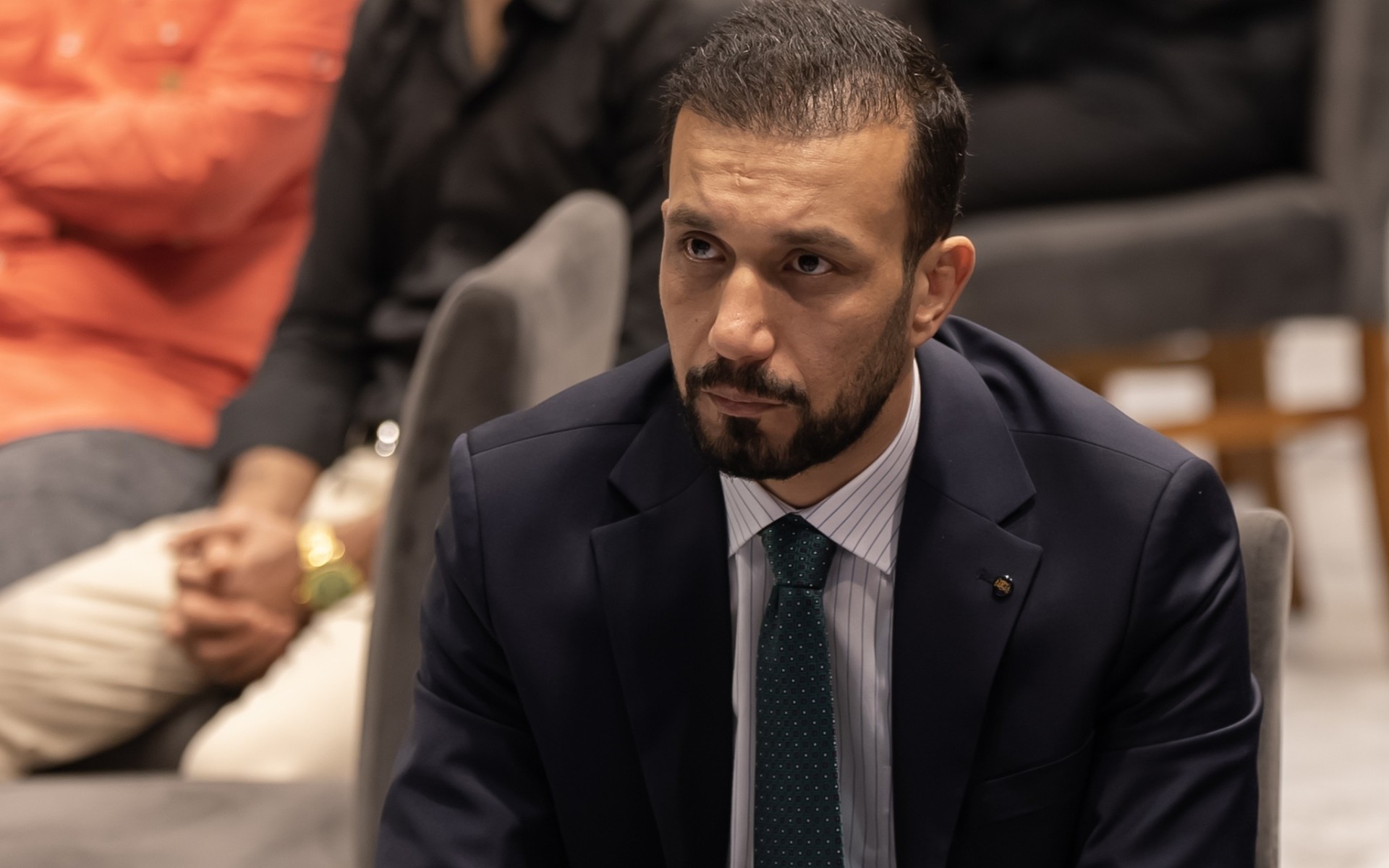

Amer Moayed, an Iraqi sports journalist, did not sleep for 24 hours before the match—and another 24 hours after it.
In this match, it may be better to call him a fan, not a journalist.
“I was nervous. Everyone was nervous. Even the dead were nervous,” he said, exaggerating to describe the importance of the match.
It is eight in the morning on April 1, 2026, Baghdad time. Iraq has reached the finals of the 2026 World Cup.
Iraqis said: “This is not an April Fool’s joke. We will actually be present at the world’s most important football tournament.”
The day before the match, the Iraqi government delayed official working hours in state institutions by one hour. The match was scheduled for six in the morning Baghdad time, while the official workday starts at eight. So it was postponed to nine.
After the match Iraq played against Bolivia in the final playoff for World Cup qualification, the government announced a suspension of official work on Wednesday and Thursday to mark the qualification.
Iraq won by two goals, scored by Ali Al-Hamadi and Iraq’s top star Ayman Hussein.
Ayman Hussein, who scored the winning goal, appeared in a video congratulating Iraqis: “May God grant security and safety to our country and all Islamic countries.”
Iraqis poured into the streets of cities in large numbers. Tears, joy, chants. They raised only the Iraqi flag. One person tried to raise the Iranian flag, but the crowd prevented him. Six hours before the match, drones carrying munitions were flying over Baghdad. Some of them fell on the Diplomatic Support Center near Baghdad International Airport.
Nothing stopped Iraqis from chasing the dream. Not even war.
From the early hours of dawn, cafés and restaurants opened their doors, and halls were lit by the glow of large television screens. People gathered in the streets, their eyes fixed on the screens. Nothing occupied them except the match result.
Even news of the war close to them meant nothing. Ninety minutes—that alone was the mission.
Iraqis waited 40 years to return to the World Cup.
The first qualification was in 1986. At that time, Iraqis were living in conditions similar to those they live in today. Their war with Iran was in its sixth year and had ground down tens of thousands of Iraqis.
Today, after forty years of that long wait, Iraq returns to the World Cup.
From that participation, Iraqis remember their only goal against Belgium. It was scored by the late Ahmed Radhi.
At that time, the “golden generation” wrote a sporting epic despite being deprived of playing on home soil. But behind the glow of qualification then, the reality was bitter.
Uday Saddam Hussein, the son of the former president, controlled the sports scene with an iron grip, using intimidation and torture to force players to win in competitions.
Former player Samir Kazem speaks in testimony about what players faced after losing a match: “Uday Saddam Hussein detained us in a red room at the Olympic Committee for five days.”
Today, in 2026, the national team players compete under extraordinary circumstances. While the region was ablaze with regional conflicts and missile threats, the “Lions of Mesopotamia” were playing the longest qualification marathon in their history (21 matches), proving that the dream of qualification was achievable—and they achieved it.
The 43-Hour Journey
In February 2026, with Iraqi airspace closed, the team was forced to travel through an exhausting 43-hour journey. It began with 15 hours by land from Baghdad to Amman, then to Lisbon, and finally to Mexico.
Australian coach Graham Arnold, who took on the mission under the toughest circumstances, said: “I am extremely happy that we made 46 million people happy.”
He added: “Especially with what is happening in the Middle East right now, I am very happy for them.”
The three most notable achievements of Iraqi football all came during years of war.
In 1986, they were at war with Iran and qualified for the World Cup. In 2004, when they finished fourth in the Athens Olympics and defeated Portugal led by Cristiano Ronaldo, they were at war against terrorism.
And when they won the Asian Cup in 2007, sectarian war was tearing Iraq apart.
Today as well, war is raging in the region, drones and missiles fill Iraq’s skies, and yet they have reached the World Cup.
Iraqis now look to Canada and the United States, where Iraq will face France, Senegal, and Norway in Group Nine. Despite the difficulty of the opponents, Iraqis see their team as having an opportunity to prove itself. They hope it will become the tournament’s dark horse.
More than 36 hours after the victory, the celebrations have not ended.
Iraqis are still living in the euphoria of qualification. They welcomed their team in the Jordanian capital, Amman. They are preparing for major celebrations upon its arrival in Baghdad.
The closure of the U.S. embassy in Baghdad will pose a challenge for Iraqi fans who wish to travel to support the Lions of Mesopotamia. Time is short, appointments are unavailable, and consular services in Erbil are suspended.
As this story is being written, three drones struck Camp Victory in Baghdad. Yet celebrations in some areas of the capital have not stopped.
“It’s the World Cup, gentlemen,” says Amer Moayed—the journalist, I mean, the fan.
The article is a translation of the original Arabic.

Mustafa Saadoon
Mustafa Saadoon is an Iraqi journalist who has worked for several international and Arab media organizations. He covers politics and human rights.
