
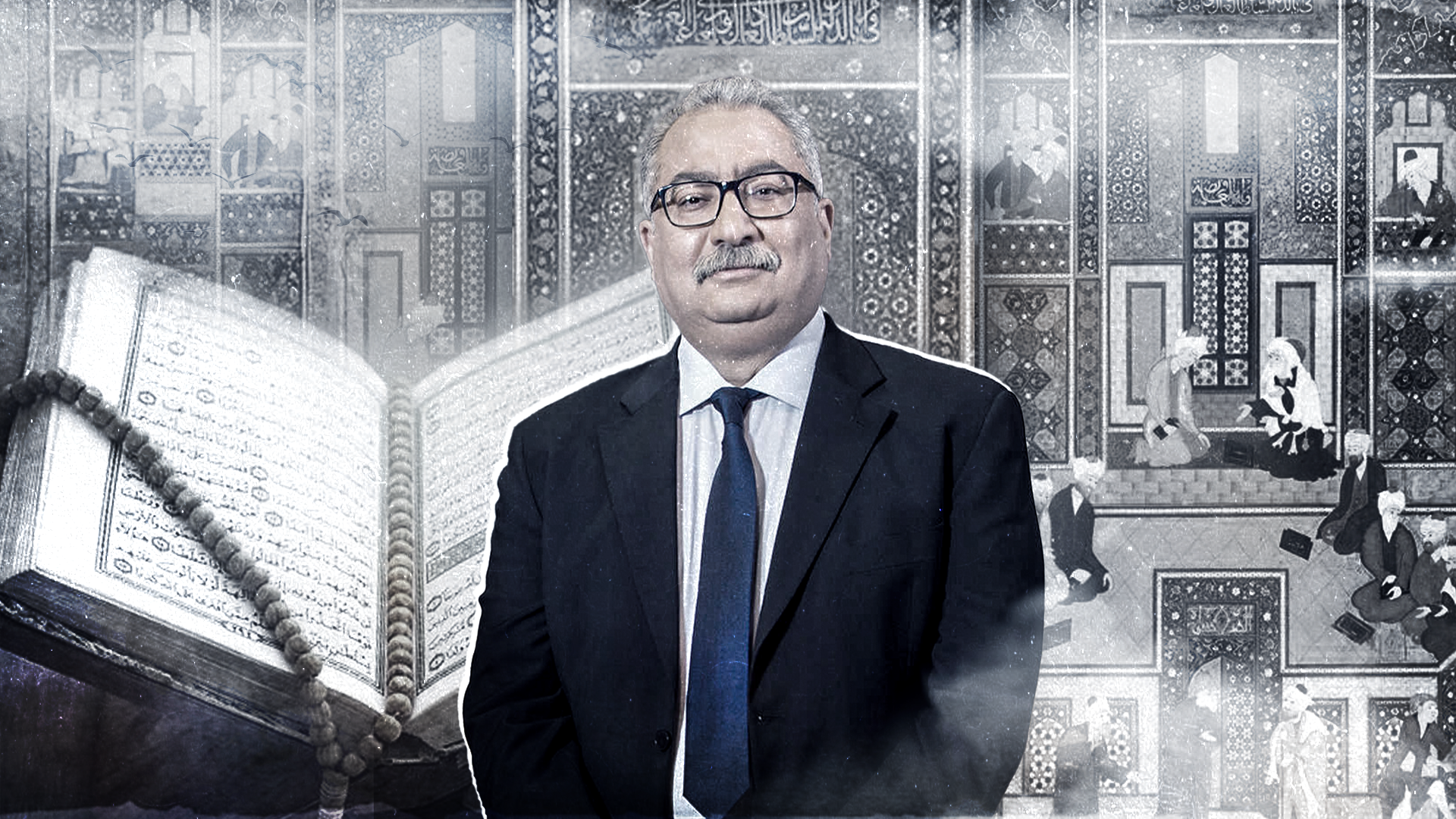

In his weekly program on Alhurra’s digital platforms, author and journalist Ibrahim Essa examines what he describes as the war extremists wage against art. He explains how hardline Salafist movements have long used antagonism toward art as a tool to “drain the public’s emotions” and condition people to accept violence and hatred.
Essa argues that aggression on arts has never been merely acts of violence; they have been paired with an effort to construct a religious-legal framework that bans music and singing, even though Islamic history—and the actual lives of Muslims—have never been void of artistic expressions.
The following is a summary of the main ideas from the episode, edited for clarity and readability.
A Conspiracy Against the Human Spirit
Essa says that since the rise and spread of the Salafist movement during the so-called “Islamic awakening” of the early 1970s—manifested later in groups like Juhayman al-Otaybi’s followers, Afghan jihad networks, and the surge of political Islam movements in Egypt and beyond—Salafi thought has been fundamentally preoccupied with what he calls “drying out the heart.”
This “drying” and “hardening of the soul,” he says, stems from their belief that true religiosity must be stern, harsh, grim, and joyless. And central to that worldview is a confrontation with art.
Essa asks: How is it that those who believe the West conspires against them, who see crusader colonialism lurking at every corner, and who think violence and bloodshed are the path to salvation—how do they still find time to wage war on art?
He goes further: If extremists recognize the power and influence of art enough to fight it this fiercely, why do so many artists fail to recognize the value of their own work?
Extremists attack art, he argues, because art nurtures empathy. A person who loves music, poetry, theater, and cinema—a person who wakes up to Fairuz and cherishes the voices of Umm Kulthum and Abdel Wahab—cannot easily hate, kill, or celebrate violence. Art refines the soul; extremists seek to strip that refinement away.
The “Jurisprudence of Prohibition”
Essa explains that extremists began their assault by physically attacking art: storming concerts, disrupting plays, vandalizing musical performances, and, in some cases, assassinating artists. He recalls well-known incidents from the 1970s in Egypt and elsewhere, including the attack on a theater troupe in Upper Egypt. Actor Adel Imam famously traveled with a train full of artists and intellectuals to perform in the same town in defiance of the assault.
But the second part of the campaign was ideological: constructing a religious narrative to declare art forbidden.
They rummaged through old texts, Essa says, extracting whatever they could find to claim that singing and music were sinful—despite the fact that all Muslim societies, including Mecca and Medina, have always produced and enjoyed music. “Music echoed in the Prophet’s own city,” he says. “How could anyone seriously claim otherwise?”
He notes that throughout Islamic history—across dynasties and empires—there were musicians, singers, poets, and performers. No caliph ever issued a decree banning music.
The modern Islamist movement, however, revived minority, long-abandoned interpretations from old books to justify a sweeping prohibition.
The Misuse of “Idle Talk”
Essa addresses a central argument used by hardline preachers: that the Quranic phrase “idle talk” (lahw al-hadith) refers to music and singing.
“No prophet said this, and the Quran does not say this,” he argues. “If God intended to prohibit music, the text would have stated it clearly—as it did for wine and gambling.”
He adds that extremists project their own ideology onto scripture, insisting their interpretation is definitive when it is merely conjecture.
Essa also offers his own reading: perhaps “idle talk” refers instead to the discourse of extremism itself—the rhetoric of hatred, exclusion, and takfir that distracts Muslims from justice, freedom, and the higher values of the Quran.
Art and the Afterlife
Essa concludes with a provocative reflection: How can a person who lacks appreciation for beauty—colors, trees, flowing water, birdsong, melody—expect to experience the beauty of paradise?
“Paradise is all beauty,” he says. “How can someone with a dried-out heart, numb to feeling, blind to emotion, appreciate it?”
He ends sharply and humorously: “Only a person with a sense of beauty can enter paradise—so how can art be forbidden? You’ve made life unbearable… may God ruin your arguments.”

