Freedom Remembered
Echoes of War, Reflections of Peace

Freedom Remembered
- Photo essay by
- Lara Ajami

Since moving to the United States thirteen years ago and settling in the suburbs of Washington, I never really thought about visiting the World War II Memorial. But when my editor asked for a D.C. photo-essay idea, this place came to mind. I grabbed my camera and went.

As I walked among the fountains and carvings, I couldn’t help but think about how people always try to turn the page after any war — even when that page stays open inside the heart. Every stone here holds an echo of a story, every engraving a memory that refuses to fade.

I framed my lens on a simple scene: a man walking his dog by the fountain, with the Lincoln Memorial rising tall in the background. It’s the ordinariness of this view that makes me stop every time. For a moment, everything feels so normal — and that’s what gives it power.

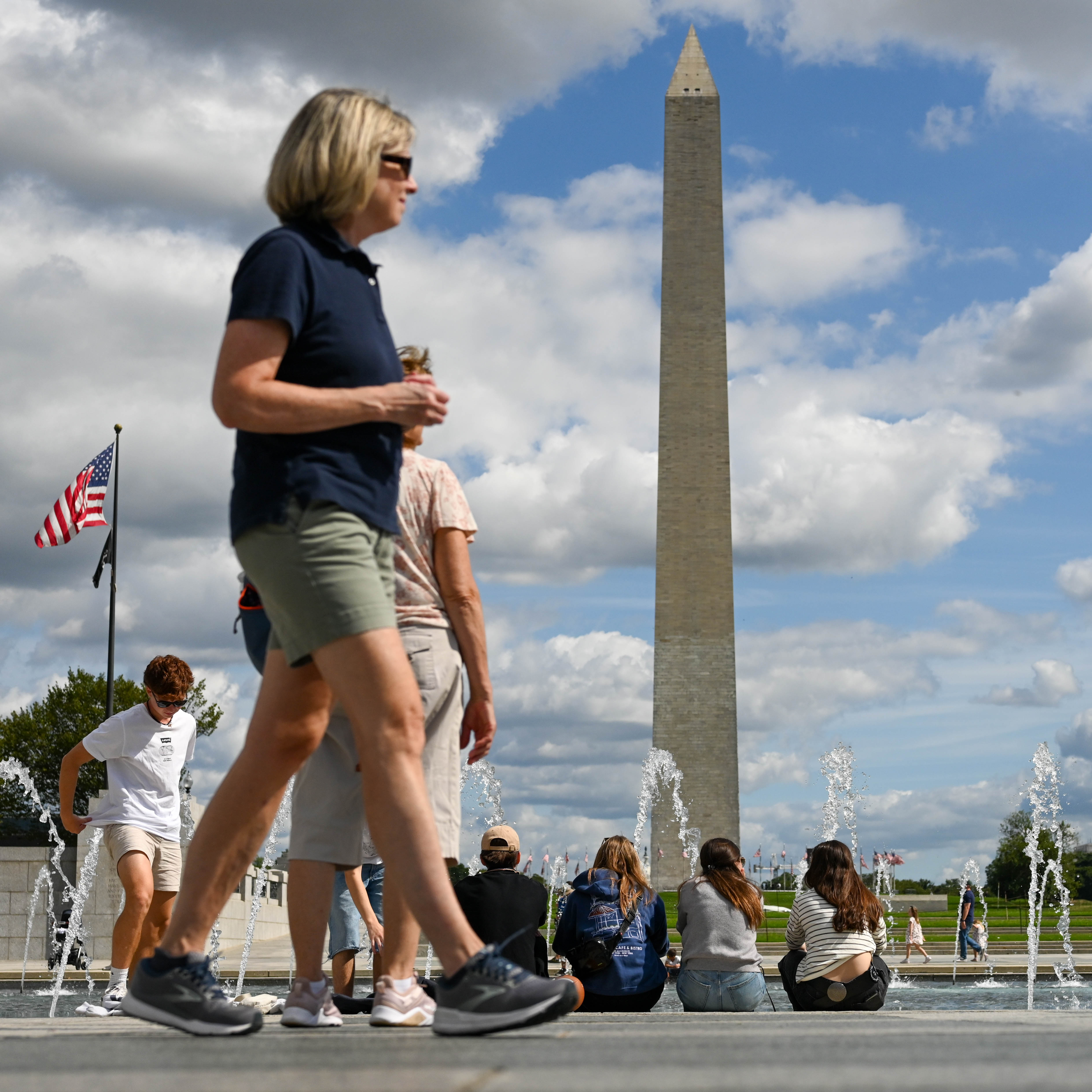
Families taking photos, tourists cooling off in the fountain’s mist, and the gentle sound of water blending with friendly conversations — these small details are what give the place its soul, turning a memorial into a living space.

This simple freedom — to gather, to rest, to feel safe without fear — is what defines American life today. It’s a feeling that can’t be priced, yet it’s a constant reminder that real peace never comes easily.

The contrast between this calm and what’s happening in other parts of the world — that’s the story itself. The peace people enjoy here wasn’t free; its price is etched everywhere you look.

The fifty-six stone pillars surrounding the plaza symbolize the unity of the American states and territories that fought together for victory. Each pillar bears a name, reminding us that triumph was not an individual act, but the result of complete solidarity.

At the end of the plaza stands the “Wall of Freedom,” capturing the essence of the place. Across it shine 4,048 golden stars — each one representing a hundred lives lost in World War II. Standing there, the numbers begin to feel like faces, and history feels closer.

In front of the “Wall of Freedom,” you realize that wars do end — but the value of peace remains. Perhaps that’s the meaning of this place: to remember the past, appreciate the present, and move forward with gratitude.

Since moving to the United States thirteen years ago and settling in the suburbs of Washington, I never really thought about visiting the World War II Memorial. But when my editor asked for a D.C. photo-essay idea, this place came to mind. I grabbed my camera and went.

As I walked among the fountains and carvings, I couldn’t help but think about how people always try to turn the page after any war — even when that page stays open inside the heart. Every stone here holds an echo of a story, every engraving a memory that refuses to fade.

I framed my lens on a simple scene: a man walking his dog by the fountain, with the Lincoln Memorial rising tall in the background. It’s the ordinariness of this view that makes me stop every time. For a moment, everything feels so normal — and that’s what gives it power.

Families taking photos, tourists cooling off in the fountain’s mist, and the gentle sound of water blending with friendly conversations — these small details are what give the place its soul, turning a memorial into a living space.

This simple freedom — to gather, to rest, to feel safe without fear — is what defines American life today. It’s a feeling that can’t be priced, yet it’s a constant reminder that real peace never comes easily.

The contrast between this calm and what’s happening in other parts of the world — that’s the story itself. The peace people enjoy here wasn’t free; its price is etched everywhere you look.

The fifty-six stone pillars surrounding the plaza symbolize the unity of the American states and territories that fought together for victory. Each pillar bears a name, reminding us that triumph was not an individual act, but the result of complete solidarity.

At the end of the plaza stands the “Wall of Freedom,” capturing the essence of the place. Across it shine 4,048 golden stars — each one representing a hundred lives lost in World War II. Standing there, the numbers begin to feel like faces, and history feels closer.

In front of the “Wall of Freedom,” you realize that wars do end — but the value of peace remains. Perhaps that’s the meaning of this place: to remember the past, appreciate the present, and move forward with gratitude.