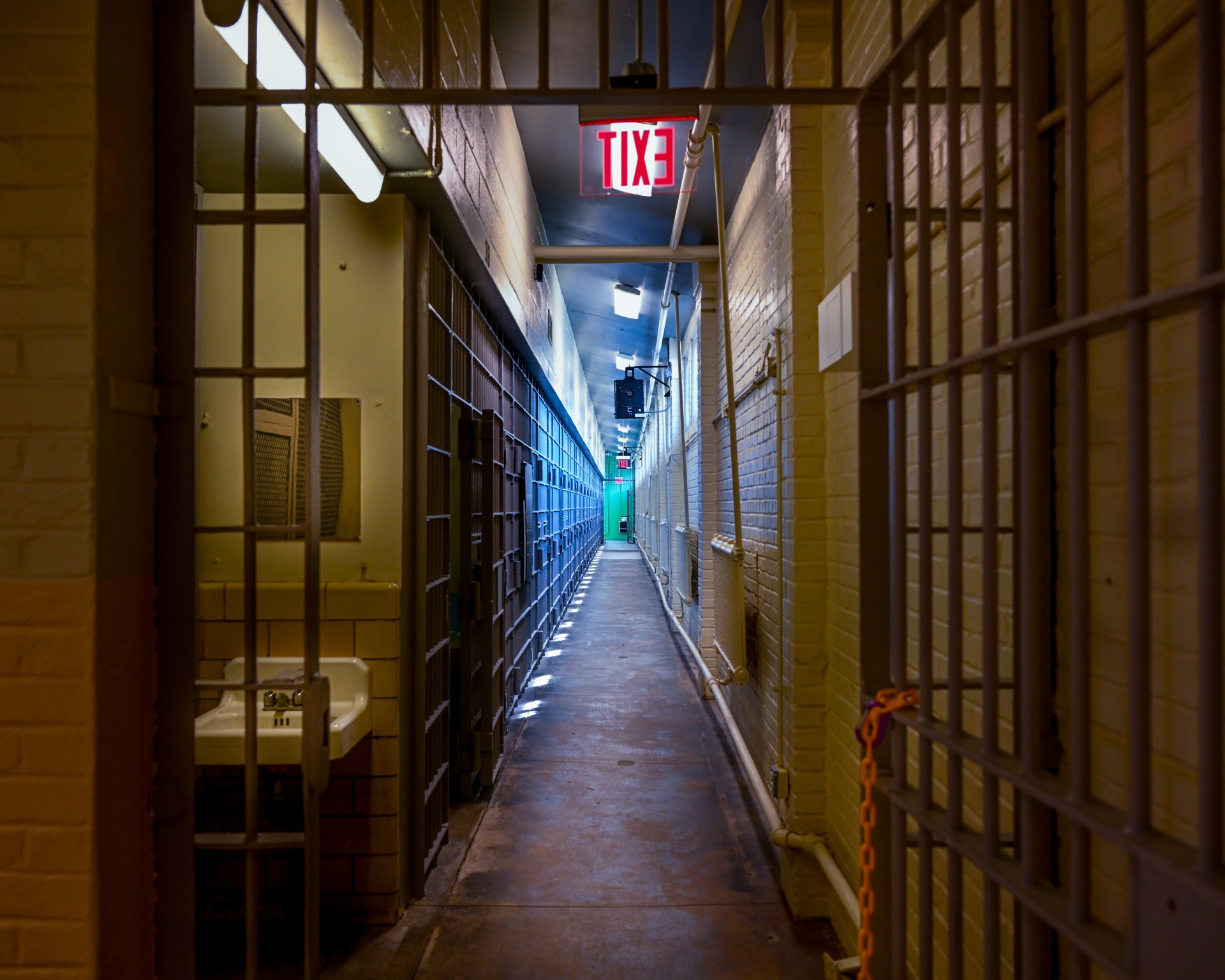
A prison without walls or watchtowers? Lorton prison began in 1910 with the idea that rehabilitation mattered more than punishment. It operated for 91 years, though not always as its founders imagined.
One detail that struck me was that the prisoners made the bricks and helped build the very prison that would hold them. They also cultivated the surrounding land, allowing the prison to meet much of its own needs.
Women who protested outside the White House in 1917 demanding the right to vote were imprisoned here. During what became known as the “Night of Terror,” guards assaulted the women, drawing public attention to their cause and giving new momentum to their fight for voting rights.
Lorton gradually drifted from its original vision. By 1930, walls and watchtowers surrounded it; overcrowding and violence followed in later decades. Walking past the bars, those early ideals felt distant.
In the solitary confinement section, the cell doors caught my attention. Instead of the usual bars, they were fitted with fine metal mesh. As the guide explained, the design was intended to prevent prisoners from throwing waste at the guards. To see inside a cell, I had to peer through a small opening in the door.
As I walked past the cells, I was startled by a figure I briefly mistook for a real person. The lifelike sculpture is part of an exhibit about former prisoner Karim Mowat, who spent six months in this cell in 1995. Three decades later, he returned to help create the exhibit that tells his story.
Long before Lorton became an arts center, prisoners found their own ways to be creative. In Karim’s cell, one example remains: a chessboard with pieces the prisoners made from toilet paper.
Lorton closed in 2001, but its story did not end there. In 2008, part of the former prison reopened as an arts center and workshop. Today, people come by choice to a place where prisoners once had no freedom to leave, spending their time painting, sculpting and making pottery.
I came to see what remained of an old prison. I left thinking about the people creating here today. The past remains, but life within these walls has changed.