

Trump says the war is “pretty much” complete. The Pentagon is planning through September. Those two statements are not the same thing, and the gap between them may define the days or weeks ahead.
Iran has a new supreme leader: Mojtaba Khamenei, the son of the man Washington and Jerusalem just killed. He inherited the title and, with it, an Israeli bull’s-eye on his forehead. Inside Tehran, power is shifting from the clergy to the Revolutionary Guard in ways that may outlast any ceasefire. Meanwhile, veteran diplomat Ryan Crocker calls this the biggest event in the Middle East since 1979, and warns that nobody has a plan for the day after the bombs stop falling.
Also in this week’s Agenda: Economic pressure is building across the Gulf. Lebanon is navigating carefully as Israeli strikes hit Hezbollah sites. And why Washington’s silence on its ally’s attacks in Lebanon speaks volumes.
Andres Ilves, Ezzat Wagdi Ba Awaidhan, and Sakina Abdallah contributed reporting to the Agenda this week.
Follow our flagship MBN news sites (in Arabic or English) for the latest updates.
If you prefer to read the Agenda in Arabic, click here. Share your thoughts anytime at mbnagenda@mbn-news.com. And if the MBN Agenda was forwarded to you, please subscribe.
Iran Watch
The Nepo Supreme
Iran has a new supreme leader. He is the son of the man the United States and Israel just killed.
Iran’s Assembly of Experts named Mojtaba Khamenei to succeed his father, Ali, in an emergency session on Sunday. Within hours, the Revolutionary Guard and Iran’s armed forces pledged their “complete obedience” to him.
A State Department official in the Bureau of Near Eastern Affairs told MBN the choice reflects wartime logic, not religious merit. “Mojtaba’s rise cements a hardline path in Tehran,” the official said, “and leaves Washington’s core concerns about Iran’s behavior unaddressed.”
Clerics had long resisted Mojtaba’s candidacy, citing thin theological credentials and the uncomfortable symbolism of a son inheriting his father’s office. The late Ali Khamenei himself reportedly opposed it, warning against turning the Islamic Republic into a monarchy. What changed the equation was the war. With the system under bombardment and the inner circle needing a reliable wartime boss, the son they knew beat out the clerics they did not.
Mojtaba’s real base is not in the seminaries. For two decades, he sat at the center of his father’s office, controlling access, budgets, and sensitive files, all in constant contact with Revolutionary Guard and intelligence commanders. Several sources have named him as the man who urged security forces not to hold back during the 2009 crackdown.
Washington is not pleased. In an Axios interview published March 5, President Trump said Mojtaba “is unacceptable to me” and insisted he “has to be involved” in picking Iran’s next leader. Israel’s defense minister has been blunter: any successor to Ali Khamenei, he said, “will be an unequivocal target for elimination.” Mojtaba has now inherited that status along with the title.
Read our full analysis in the Iran Briefing

MBN Iran Briefing:
Andres Ilves’ weekly reporting and understanding of what’s going on in Tehran and its impact on the wider world.
Washington Signals
Beyond Weeks
“I think the war is very complete, pretty much.”
President Trump said that to a CBS News reporter on Monday, according to CBS senior White House correspondent Weijia Jiang. It is the most optimistic public statement any senior official has made since Operation Epic Fury began.
The Pentagon is not planning that way. Congressional sources confirmed to MBN that U.S. Central Command has requested additional military intelligence officers for its Tampa headquarters to support the Iran campaign through September, a planning horizon of at least 100 days. The request was first detailed in an internal Pentagon notification obtained by Politico.
A senior U.S. intelligence official told me that the request signals the true scope of the operation. “Prudent planning, not presidential guidance,” the official said.
Defense Secretary Pete Hegseth has insisted America has “only just begun to fight” and can sustain operations “as long as we need to.”
The gap between the White House’s public framing and the Pentagon’s internal planning horizon is now visible. The heady optimism of messaging is colliding with the grim realities of logistics.
Listen and Watch

What Comes Next?
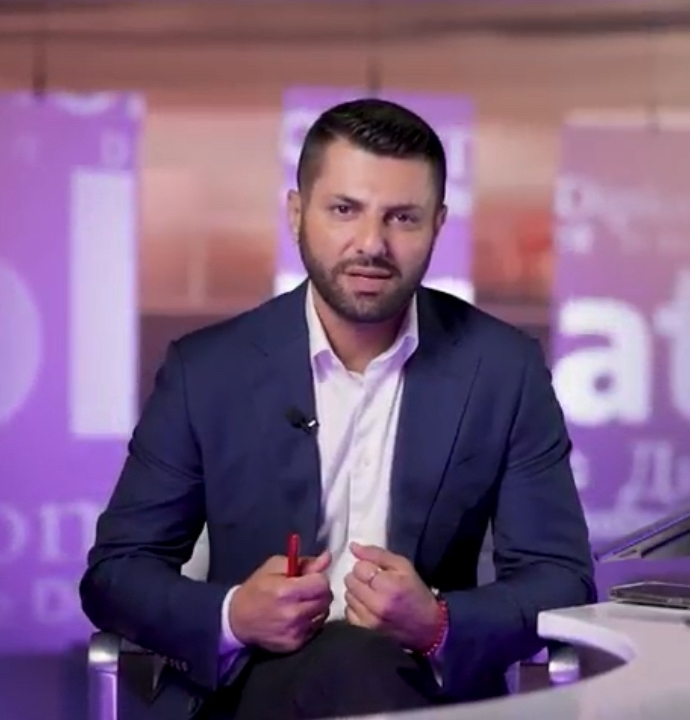
Khamenei is gone. The real story is the vacuum opening behind him. In the latest episode of The Diplomat, I sat down with Alex Vatanka, one of Washington’s most respected Iran analysts, to break down who takes power, whether the Revolutionary Guard consolidates or fractures, and what happens if the Islamic Republic does not survive the moment that has tested it like never before.
Watch The Diplomat here
Economic Signals
The missiles are not the only threat to Gulf economies. The economic pressure is building from a different direction, and some of the region’s most prominent voices are starting to say so publicly.
In an open letter to President Trump posted on X on March 5, Dubai billionaire Khalaf Al Habtoor asked directly: “Who gave you the authority to drag our region into a war with Iran?” His concern is concrete. A wider conflict, he warns, will hit energy infrastructure, tourism, and investor confidence across the Gulf in ways Washington has not fully calculated.
The signal from the diplomatic level is quieter but pointed. “We have to consider our economic security,” a Bahraini diplomat told MBN. “Not sure if taking drastic measures like stopping AI investments in the U.S. and Europe because of this war should be done now, but we definitely have to assess that.”
On the ground, Gulf governments moved quickly to contain food security fears. Kuwait banned food exports. The UAE tightened market oversight. Saudi Arabia conducted more than 10,000 inspection visits in a single week. “All Gulf states have strategic reserves of food supplies that can last for several months,” Bahraini financial expert Dr. Fawzi Behzad told MBN. “This is not something created in the moment but the result of many years of preparation.”
The deeper vulnerability is structural. More than 70 percent of Gulf food imports pass through the Strait of Hormuz. Those reserves cover roughly six months. Most crises, as one Omani economist noted, rarely last longer than three.
The Gulf is not panicking. But it is calculating.
Quote of the Day
 In this war, the Middle East will bear the brunt of the energy shock. Gulf economies are being hit simultaneously by higher prices, disrupted trade routes, and damaged infrastructure. The longer this lasts, the greater the risk that investment and diversification plans will be set back by years, not months.
– Dan Katz, Deputy Managing Director of the International Monetary Fund, March 5
Featured Conversation

Dark Unknown
Veteran diplomat Ryan Crocker has seen the Middle East’s worst moments. He survived the 1983 Beirut Embassy bombing. He served as U.S. ambassador to six countries across the region. He’s now the chairman of the board of MBN.
In a conversation with MBN journalists, Crocker said what is happening now is the biggest event in the Middle East since the Iranian Revolution in 1979.
“Bigger than 2003 in Iraq. Bigger than Afghanistan in 2001. Bigger than Gaza, a lot bigger.”
Crocker’s phrase for what comes next: a vast and indefinite period of the great dark unknown.
The United States and Israel are the strong horses for now. The Iranian Navy is, in his words, “pretty well underwater.” Gulf states have unified to a degree he calls unprecedented. But nobody in Washington or the region knows what happens when the bombing stops.
Three warnings stand out from the conversation. First, Iran’s retaliation will not stay on the battlefield. Tehran maintains a global sabotage network, targeting embassies, diplomatic facilities, and civilian infrastructure far beyond the region, and that network does not stand down when the air war pauses. Crocker survived the 1983 Beirut Embassy bombing. He knows what that looks like. Second, power inside Iran is shifting permanently from the clergy to the Revolutionary Guard. Any successor to the supreme leader will be, as Crocker put it, “not exactly supreme anymore.” Third, air power alone cannot determine what comes next. The United States has no plan for the day after, and history, from Beirut to Baghdad to Tripoli, suggests that matters enormously.
“How much can you do from the air alone?” Crocker asked. “You can do a lot militarily. We’re showing that. But do you affect regime change that way? Very debatable.”
Read the full conversation here

The MBN China Tracker is a data-driven, interactive feature on how successfully Beijing wields economic, political and military influence in the Middle East compared to the U.S.
Lebanon Watch

Washington’s Careful Silence
The United States has issued no statement on the Israeli strikes hitting Hezbollah sites across Lebanon. The silence is not ambiguity. It is a position.
“The State Department and Embassy Beirut explicitly describe security assistance to the Lebanese Armed Forces as a key component of U.S. policy,” a senior State Department official told MBN. “The United States is the Lebanese Army’s largest external funder and has for years framed that assistance as a way to strengthen the army as Lebanon’s sole security guarantor.”
Washington has not publicly defined the limits of its tolerance for the Israeli strikes. But Paul Shaya, a former intelligence official and professor at George Washington University, says the unspoken line is clear. The United States supports Israel’s right to strike Hezbollah as an Iranian proxy. What it does not want is those strikes to affect Lebanese state infrastructure or escalate into a full ground war inside the country. “The United States wants the fire confined to the armed space of the party, not deep inside the state,” Shaya told MBN.
On the Lebanese side, Prime Minister Nawaf Salam said on March 5 that his country “did not choose this war.” His government has declared Hezbollah’s military activities illegal and called for the group to hand its weapons to the Lebanese Army.
That position gives Washington something to work with. The Lebanese Army has made progress in disarming Hezbollah near the Israeli border, backed by U.S. funding and pressure from France and Saudi Arabia. The question now is whether Israeli strikes undermine that progress or accelerate it.
Washington wants both. That is the tension that remains unresolved.
Read the full article here

Joe Kawly
Joe Kawly is Washington Bureau Chief for MBN and a global affairs journalist with more than twenty years covering U.S. foreign policy and Middle East politics.
A CNN Journalism Fellow and Georgetown University graduate, he reports from Washington at the intersection of power and diplomacy, explaining how decisions made in the U.S. capital shape events across the Arab world.
