
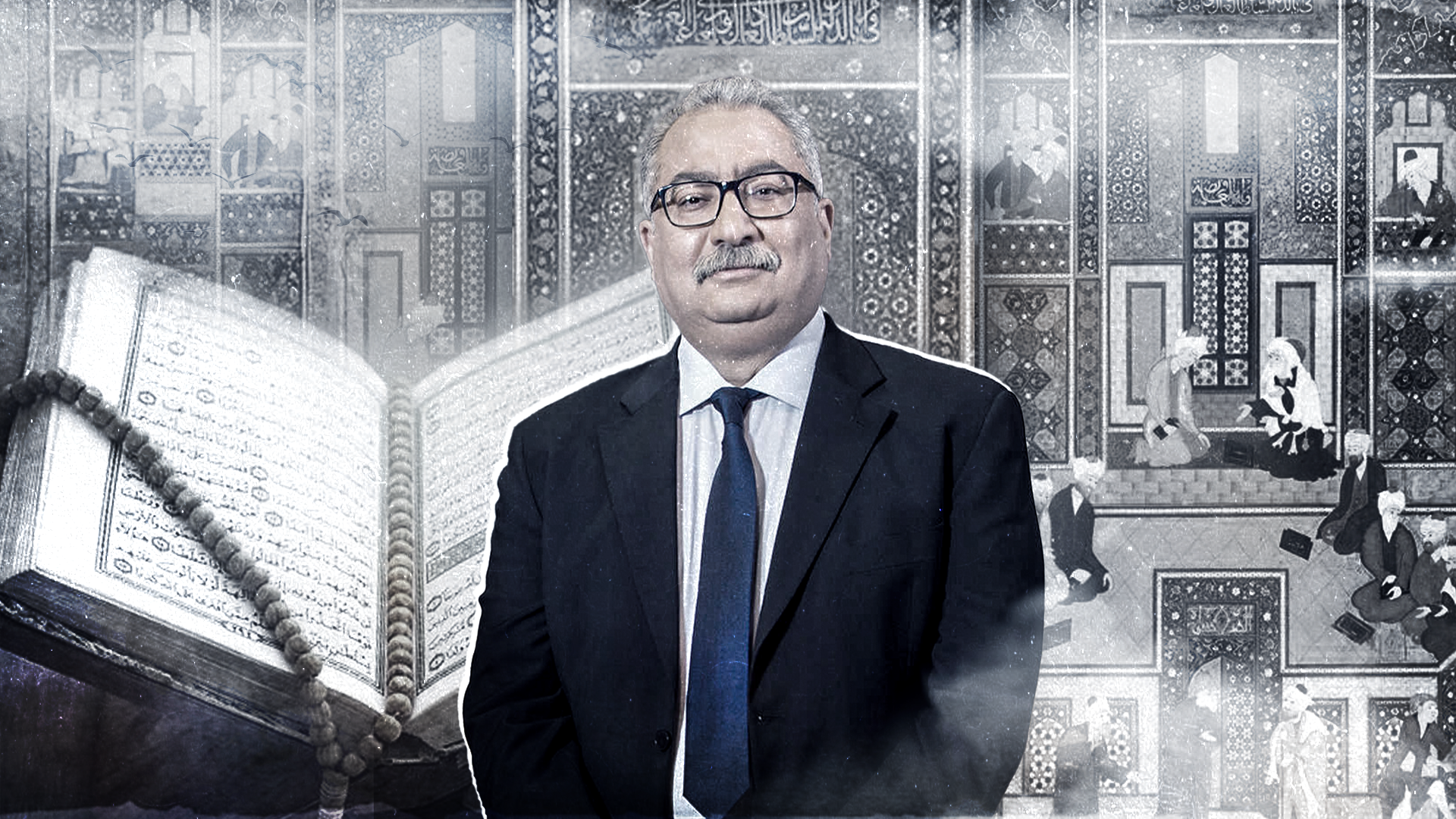

In his program on Alhurra’s digital platforms, writer and journalist Ibrahim Essa this week discussed the Islamist obsession with women and sex, and how the issue of women is politically exploited as a path to power.
The following article highlights the main points from the episode, edited for easier reading.
Women at the Center of an Intellectual Storm
Women live at the heart of an intellectual storm created by Islamists. They occupy their minds and fatwas to the point of obsession. This obsession cannot be understood without deeper reflection and a broader perspective.
In the early centuries of Islam, Muslim society was not nearly this rigid. There was openness: markets included women and men interacting, there was natural social mobility. From the dawn of Islam through later centuries, the situation was not as hostile toward women as it is today.
So what happened? What changed?
A Pathological Obsession
When we speak of sexual obsession among Islamist currents — whether political, extremist, or traditional Salafi — we are not exaggerating.
One might think they only ever think about women and sex, as if their obsession had reached a pathological level requiring psychological treatment.
This obsession could drive entire groups to seek psychiatric care. After all, many psychological disorders rest on three pillars: religion, sex, and politics.
These pillars appear to collide in the minds of these extremists, making the issue one for psychoanalysis rather than political analysis — or even religious or social thought.
The best example of this obsession is what the Taliban in Afghanistan are doing to women today: banning them from leaving home, from education, from any attire that does not cover them completely, even their eyes. These are the dreams of Islamists everywhere. They have been realized in Afghanistan, though not yet elsewhere.
When ISIS emerged and declared its so-called caliphate in 2015–2016, women were also the focus of this same obsession.
The Spirit of the Desert
In the early centuries of Islamic civilization, women were strongly present in society. They traded, sold goods, worked, studied, and read the Qur’an in mosques.
Society was not closed, nor was there this suffocating rigidity where women found themselves trapped within restrictive jurisprudence, fatwas, or entirely isolated communities.
On the contrary, Islamic history after the Prophet stands on the shoulders of two women: his daughter Fatima and his wife Aisha.
From Fatima came Shiism. From Aisha came one of the roots of the great Islamic schism that shaped Sunni Islam. The conflict in early Islam was essentially a conflict between two camps, symbolized by Fatima and Aisha.
Regardless of the nature of the conflict, women were central and essential players in Islamic history and even in shaping religious doctrine from the very beginning.
Even during the eras of the Umayyad and Abbasid caliphates, in roughly the millennium after the time of the Prophet, women were present and active: in economic, social, commercial, artistic, and cultural life. When you read history and literature, you find women leaving a major imprint.
Even discussions of sex were open and permissible, whether in poetry and famous love stories like that of star-crossed lovers Qays and Layla, or in scholarly works by jurists and imams. Just read what the renowned scholars, philosophers, and writers al-Suyuti, Ibn Hazm, and al-Nafzawi wrote about women, sex, and pleasure.
So where did this hostility come from? What made Islamist movements so pathologically obsessed with women and sex?
Some assume it stems from Christian or Jewish influence. The answer is: no. This spirit did not come from other religions, but from the desert: its harshness, its patriarchy. Later, a desiccation of religious thought took hold, perhaps in the Ottoman period, perhaps influenced as well by medieval European attitudes that demeaned and objectified women. But ultimately, it became part of a political project.
Woman as a Political Target
If this rigidity did not come from the essence of religion, then what is the real reason? The answer lies in the political use of religion to achieve power and control.
Islamist movements seek power by fracturing society as a first step. They begin with the “primary division”: between men and women. This division then expands to include sects, then religions, and finally splits even within the same faith. This continual process of fragmentation isolates society and makes it easier to dominate.
Targeting women as the first step is no accident: it is a deliberate choice. Women are considered “the weaker party.” Controlling them produces a visible, tangible victory, a proof of “implementing sharia.” It is the easiest way to begin the process of social disintegration.
This political exploitation is clearest in the case of the veil, or hijab. In the 1960s, for instance, women’s dress in Muslim societies was generally shaped by local customs and traditions, not by religious obligation.
In Kuwait, women were not necessarily veiled. Elsewhere, some still wore the burqa. In Upper Egypt, women’s dress differed from that in the Delta; women in Damascus differed from those in Syrian tribes. Women’s status was determined by geography, custom, and era, not rigidly by religion.
But in the 1970s, with the rise of the so-called “Islamic Awakening” and the spread of Salafi-Wahhabi influence, Islamist groups sought to infiltrate society. They found in women the perfect vehicle to display their dominance, and declared the hijab a “religious duty.”
Thus, women shifted from being natural human beings to symbols of control. Sex shifted from a field of love and pleasure — fiqh al-nikah (the laws of marriage) — to jihad al-nikah (sexual jihad), where women are used as political weapons, as tools of jihad, and as entertainment for terrorists.
This shift—from a religious concept to a political weapon—proves that the true motive behind this rigidity is power, not piety.

