
Antisemitism online mutates depending on the language of the platform.
In English, it often takes the form of conspiratorial claims about Jews controlling media or governments. In Arabic, it more frequently becomes direct and religious: Jews as “the enemy.”
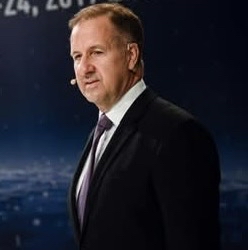
To explore these dynamics, MBN sat down with Tal-Or Cohen Montemayor, founder and CEO of CyberWell, which monitors antisemitism in multiple languages across major social media platforms.
From Law to Digital Investigation
Cohen Montemayor began her career in the law. But a 2018 synagogue shooting in the city of Pittsburgh in the US, in which eleven people were killed, moved her to switch careers.
Her subsequent work in open-source intelligence exposed her to ‘dark web’ forums, where antisemitic memes were crossing into mainstream networks, leading to her to ask “’what is the difference between a dark channel and a mainstream social media platform?’ And one of the answers is that the mainstream platforms actually have a rule book. They’re governed by self-regulating digital policies known as ‘trust and safety.’ So when I looked at this phenomenon, I thought, what if we created a solution that was really rooted in compliance with the rules of the platforms themselves and empowered by technology? That’s how I thought of CyberWell.”
Platforms as Amplifiers
For Montemayor, scale is everything.
“Meta,” she said, “has roughly three to four billion monthly average users, X [former Twitter] has about 650 million, TikTok has maybe one billion monthly average users, and then YouTube, which is also close to the three billion range … these platforms have the largest audiences in the world.” As she put it, “We’re talking about actually normalizing this type of hatred, extremism, and hostility into mainstream culture.”
After October 7th, antisemitic videos circulated, showing, as Montemayor put it, “Physical violence, harassment, humiliation, et cetera [against Jews]. And that recording is put into these high engagement algorithms, and there’s a phenomenon of almost fetishizing physical harm and humiliation towards Jews in those engagement algorithms … it creates an echo chamber of voyeurism. What that creates is ultimately upping the threshold of what’s considered normal behavior and hostility against Jewish people.”
Arabic vs. English
Montemayor said that the contrasts between online antisemitism in the Arabic and English languages stand out sharply.
In English, “you have a lot of more conspiratorial language around anti-Semitism, specifically stereotypes about Jews controlling the media, controlling the government, what we call classic anti-Semitism,” she said.
By contrast, Montemayor said, in “Arabic, antisemitism is actually characterizing Jews as the enemy … dehumanization, and I would even say, religious anti-Semitism.”
She added that another common element in antisemitism in the Arabic-speaking world is “the use of the Protocols of the Elders of Zion as a source of justifying … hostility against Jewish people … justified because they’re in a conspiracy to actually control the Muslim world.”
Though debunked long ago, the czarist-era forgery – painting a picture of a secret convening of Jews to control the world – remains widely quoted in Arabic content. This fake document “was translated into Arabic and brought to the Middle East by the Soviet Union … and is still one of the most widely quoted and used sources in Arabic content that spreads anti-Semitism.”
Montemayor also talked about a new conspiracy theory she termed ‘tired Islam,’ a narrative claiming that Jews are plotting to destroy Muslim society with feminism and modern culture. “Tired Islam makes up a book … This is completely false, of course, but it is essentially a book where it outlines how the Jews are purposefully trying to, again, subjugate specifically Muslim societies by destroying Islam, by promoting feminism, by encouraging people to be proud of themselves and maybe less focused on family values and not honor their parents. It’s really just the same exact model of the Protocols of the Elders of Zion, now ‘Muslimified’ in order to create this fake conspiracy theory that Jews are trying to end Islam.”
From Conspiracy to Open Calls
The most troubling shift has been the move from myth to violence.
“In its worst peak,” she said, more than “sixty percent of the verified antisemitic content that we monitor in Arabic was open calls to violence against Jewish people. That’s really where the concern comes in here. We’re moving away from conspiracy theories into open calls to violence at a very elevated rate.”
Manufacturing Virality
Campaigns do not go viral by accident, Montemayor said. “Specifically with October 7th denial, the first tweets that we tracked that were denying the events of October 7th and the scope of that atrocity were actually coming from Lebanon with one account that had maybe 300 followers, and then all of a sudden got to three million views on one tweet that was October seventh denial.”
And even without bots, social media itself rewards extreme views. “Social media algorithms reward emotion, including outrage, including anger, including disgust,” Montemayor notes.

Andres Ilves
Andres Ilves is Iran Editor and Senior Adviser at MBN. His career as a journalist and writer includes two decades at the BBC and Radio Free Europe.
