
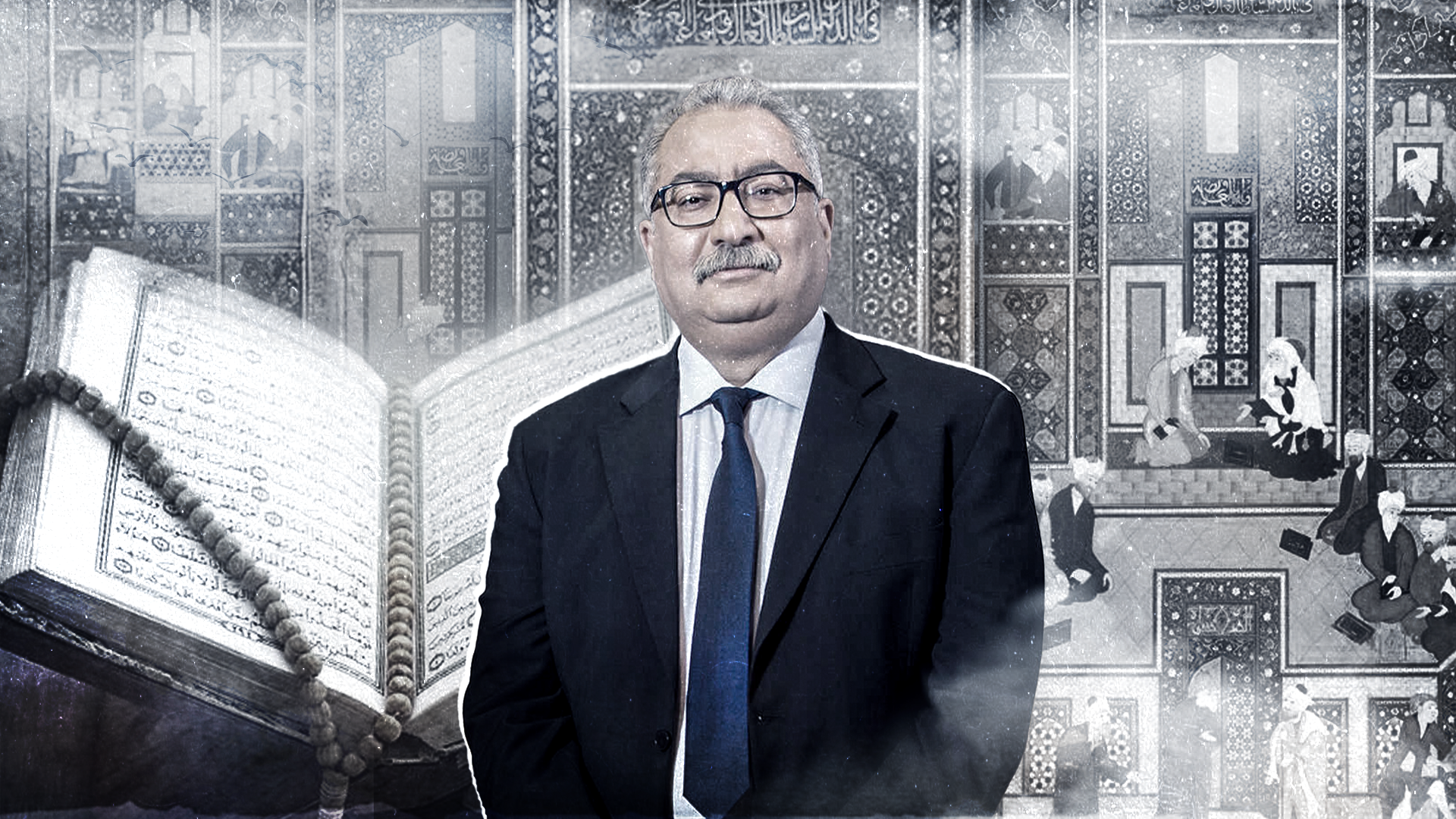
In his program on Alhurra’s digital platforms this week, writer and journalist Ibrahim Essa tackled the issue of “blasphemy,” describing it as “a sword hanging over the necks of free thought.” He explained how the charge has turned into a tool for criminalizing criticism and independent reasoning, a means to silence free debate and block any attempt at modernization or reform.
A Sword Against Free Thinking
Few expressions in Arab public life are as troubling as “blasphemy.” It is a phrase endlessly repeated, yet in practice it serves as a weapon raised against anyone who dares to think freely. It has become a ready-made tool to block dialogue, debate, or any constructive exchange.
The misery of this term lies in its absolute repressive function: it is less about protecting faith than about enshrining stagnation.
At its core, “blasphemy” is nothing more than the criminalization of thinking itself. In today’s Arab reality, it has gone beyond a mere legal clause to become an instrument of comprehensive intellectual terrorism.
Linguistically, blasphemy means contempt or insult. But can any rational person truly “insult” religion? No. Even those who discuss religion from the outside, such as atheists, engage through reason and logic. Their discussions may be sharp, rejecting, or strongly critical of belief, but they remain within the bounds of freedom of opinion and expression. Rational debate, however fierce, remains respectful because it seeks truth.
When one party looks down on the other with scorn or arrogance, the discussion collapses and the issue is lost. Respectful dialogue never rests on disdain or belittlement. Mutual respect, even in the harshest of debates, is essential for any meaningful intellectual outcome. Criticism is not blasphemy; blasphemy is arrogance and contempt for others.
From “Heresy” to Modern Law
Historically, “blasphemy” carried other names, once called zandaqa (heresy) or hartaqa (apostasy). The shift from these theological terms to a modern legal one is purely formal; the substance remains unchanged.
It reflects an attempt to grant civic legitimacy to an old form of repression, always aimed at shutting the door on ijtihad (independent reasoning) and free debate in religious matters.
Vague Scope, Criminalized Critique
This raises a serious question: what does “blasphemy” mean? The scope of the charge is so broad and vague that it can encompass almost any dissenting view or legitimate criticism.
Is it blasphemy, for example, to question a prophetic hadith and say it is inauthentic? To discuss whether the hijab is an obligation? To criticize dominant religious discourse? Or even to challenge the ideas of a prominent cleric?
Objections may target great figures, from Ibn Taymiyyah and al-Bukhari in the past to al-Shaarawi and others in the present, yet how is that “blasphemy”? Why can it not simply be seen as discussion or debate, the very essence of a healthy intellectual life?
Turning critique of human interpretations into a criminal offense means the law no longer protects sacred texts themselves, but rather the authoritative interpretations that have perpetuated rigidity for centuries. Thus, sanctity shifts from scripture to the words of clerics, closing the door to renewal.
To grasp how narrow the current space has become, one needs only recall the Prophet’s own approach when his companions came to him, confessing doubts and misgivings. He did not rebuke them; he affirmed them and encouraged reflection. That was recognition of the right to think and question. Today, however, anyone who thinks or discusses is warned: “Be careful, or you’ll be charged with blasphemy.”
This restriction contradicts the Qur’anic call to contemplation and reason.
When Defending the Prophet Becomes a Crime
The situation worsens when even defending the Prophet against fabricated or violent accounts itself becomes an accusation.
Throughout history, chroniclers and narrators invented stories to justify the massacres of caliphs and rulers who built their states on corpses. It was natural, then, that they forged reports claiming the Prophet ordered killing and slaughter, retroactively legitimizing their crimes.
But the Prophet we know from the Qur’an was never a prophet of massacre, he was a prophet of mercy.
Strangely, when modern researchers present documented evidence disproving a common claim that the Prophet married a child, proving instead that Aisha was 16 or 18, they are accused of being “against religion.” But isn’t that defending the Prophet? Isn’t that honoring him? Why, then, does honest defense become a crime?
Insisting on a defamatory narrative about the Prophet, and attacking those who refute it, reveals that the goal is not to protect religion or the Prophet himself, but to preserve literalist, distorted traditions. It is an intellectual absurdity verging on madness.
A Political Weapon
What is tragic, even bizarre, is that Arab states enshrine the charge of “blasphemy” in law mainly to appease extremists and Islamist groups. Thus, it becomes a political tool, even as these same states claim to be fighting terrorism.
By brandishing this sword, governments signal that they are the true guardians of faith. In reality, they use the law as currency, buying the silence of hard-liners at the cost of freedom of thought and inquiry.
Worse still, the charge is almost exclusively applied to those who discuss Islam from within. Those prosecuted for “blasphemy” are nearly always Muslims who profess La ilaha illa Allah, Muhammad rasul Allah [“There is no God but Allah, Muhammad is the Messenger of Allah” – the Islamic declaration of faith], while hate speech against other religions goes unpunished.
From pulpits one hears preachers describing Jews as “descendants of apes and pigs.” Is that not blasphemy? Others insult Christianity openly. Why are they not held accountable?
The double standard is glaring: the law does not protect all religions; it permits contempt for Judaism and Christianity while criminalizing internal criticism of Islam. It does not defend pluralism; it militarizes the dominant religious identity.
Thus, the charge becomes a weapon in the ruler’s hand. Instead of imprisoning dissidents for criticizing government failure, the state imprisons them for “questioning a hadith” or “criticizing al-Bukhari.” Political repression is cloaked in religious sanctity, allowing rulers to appear as defenders of the sacred while silencing opponents.
A Long History of Excommunication
The charge of “blasphemy” is not new. It extends a long tradition of takfir, declaring others infidels, and persecution. It has ensnared major figures of religious and intellectual life: Imam Muhammad Abduh, Sheikh Ali Abdel Raziq, and, long before them, Ibn Sina, al-Hallaj, and Jabir ibn Hayyan. Even Ibn Taymiyyah labeled Ibn Sina a heretic, and others met the same fate. Not even Abu Hanifa, one of Islam’s great jurists, was spared.
This long list reveals a constant pattern: the war on reason and independent thought across the ages. Even religious scholars specializing in Sharia were not immune, let alone writers, thinkers, and journalists.
Hence the painful question remains: when will this charge disappear from our laws?
The answer, sadly, is bleak. It will not vanish easily, for it remains a highly effective weapon in the hands of political and religious authorities. Why would a ruler or a cleric relinquish a tool that allows him to imprison, defame, or threaten his opponents?
It is a weapon with many uses: to kill, imprison, smear, or intimidate. Even brandishing it is enough to silence minds and seal lips. That’s why it will likely remain a permanent tool of coercion and control.
And so, the charge of “blasphemy” endures as one of the most tragic and dangerous expressions threatening freedom of thought in our modern life.

