
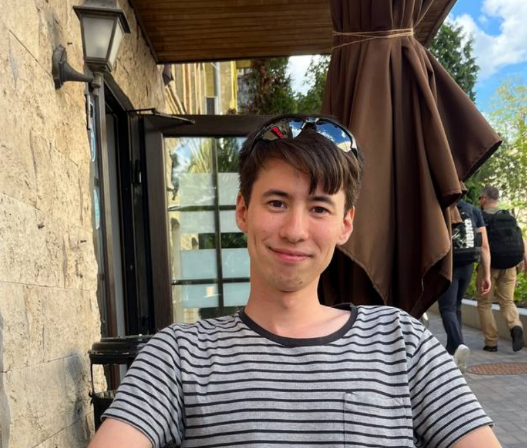

Ringo Harrison is a content coordinator based in Washington DC. He is a recent graduate from Lund University in Asian Studies. He previously worked at American Purpose.
When Chinese President Xi Jinping was received in Riyadh in 2022 with an honor guard and desert fireworks, many in Washington saw a symbolic shift. But for Saudi Crown Prince Mohammed bin Salman, the warm welcome didn’t constitute a betrayal; it merely brought balance.
Across the Gulf, from Doha to Abu Dhabi, the region’s monarchies are no longer choosing sides between great powers. They are managing both.
For decades, the Gulf relied on the United States for protection and weaponry. But in the past ten years, China has become an indispensable economic partner: a customer for oil and gas, a builder of ports and smart cities, and a financier of post-oil ambitions.
This duality now defines the region’s diplomacy: Gulf leaders pursue modernization while safeguarding security ties, negotiating from a position of unprecedented autonomy.
The result is a complex diplomatic choreography: American bases for protection, Chinese deals for prosperity.
Competing Visions
For Washington, the Gulf remains a linchpin of global strategy. U.S. forces operate from airbases in Qatar and the United Arab Emirates (UAE); American arms sales to the region exceed $20 billion a year. In return, Washington expects its partners to follow its lead on energy policy, Iran, and the global technology race.
China, by contrast, invests rather than deploys. It buys Saudi crude, Qatari LNG, and builds infrastructure worth more than $120 billion across the Gulf.
Chinese firms are also embedding themselves in logistics, ports, and digital infrastructure, linking Gulf economies to Beijing’s Belt and Road network.
Both powers now vie not only for oil and markets but also for influence in technology and diplomacy, forcing Gulf leaders into what one analyst calls “strategic multitasking.”
In this new landscape, Gulf capitals are no longer the periphery of global competition; they are the stage on which it plays out.
Riyadh’s Grand Strategy
Under Vision 2030, Saudi Arabia seeks investors and leverage. During Xi’s visit, $50 billion worth of deals were signed, including renewable-energy and digital-economy projects. Chinese companies are helping build NEOM, the futuristic megacity. At the same time, Riyadh hosts joint military drills with the United States and continues to modernize its armed forces through American defense technology.
Yet the Saudis still depend on Washington for its missile defenses and intelligence cooperation. They are even negotiating a mutual-defense pact with the U.S. while cultivating ties with China and Pakistan.
Analyst Eleonora Ardemagni, Senior Associate Research Fellow at the Italian Institute for International Political Studies (ISPI), MENA Centre, argues that such moves “reinforce, rather than replace, Washington’s security guarantees.”
For Saudi Arabia, the art is to extract the best of both worlds without being trapped in either. That balance has diplomatic value too: the China-brokered Saudi–Iran rapprochement in 2023 showed Riyadh’s willingness to let Beijing play a regional role, while still counting on U.S. power to contain Iran’s ambitions if necessary.
The UAE: Multi-Alignment by Design
No Gulf state has turned hedging into strategy quite like the UAE. It normalized relations with Israel, joined the BRICS with China and Russia, and trades freely with the West and Asia.
When Washington warned Abu Dhabi not to use Huawei’s 5G network, the UAE responded by pausing its purchase of F-35 jets, a quiet message of independence.
Officials in Abu Dhabi framed the move as a signal that sovereignty in technology choices is part of national security itself. Its ports host both COSCO’s Chinese-run terminal and U.S.-backed initiatives such as the India-Middle East-Europe Corridor.
“The Emiratis are building options,” says Robert Mogielnicki of the Arab Gulf States Institute. “It’s about reducing the baggage that comes with any single great-power relationship.”
Economically, the UAE’s diversification is staggering: non-oil trade reached around $464 billion in 2025, rising nearly 25 percent year-on-year. Dubai’s free zones now attract both Western venture capital and Chinese tech investment, reinforcing the UAE’s identity as a bridge economy rather than a client state.
The Hedging Doctrine
Across the Gulf, this “partnership without alignment” has become a regional doctrine. It has delivered billions in investment and broader diplomatic reach: Gulf capitals now mediate in conflicts from Gaza to Ukraine. Doha hosts indirect talks between Washington and Tehran, while Abu Dhabi positions itself as a neutral logistics and energy hub amid global disruptions.
But this new status also brings friction. U.S. officials have begun warning allies to curb their Chinese military and tech ties, while Beijing may one day expect loyalty in a Taiwan-related crisis. Even infrastructure projects like those offered by China’s Belt and Road program are drawing new scrutiny in Washington.
“The U.S. used to ignore such deals, but that’s changing,” says Mogielnicki. “What wasn’t a red line before could become one now.”
Analysts note that the new assertiveness in Washington reflects anxiety over losing its comparative advantage: security cooperation remains unmatched, but economic influence is no longer guaranteed.
The Road Ahead
The Gulf’s balancing act is sustainable until it isn’t. The UAE has already joined BRICS, hinting at readiness for a post-American order. Saudi Arabia, more cautious, keeps its application on hold. “Riyadh doesn’t want to rock the boat,” says Mogielnicki. In the near term, both countries will continue to exploit the competition for influence. But as global tensions rise – from the South China Sea to the Persian Gulf – the space for neutrality may shrink. When Washington or Beijing finally demands clear loyalty, the Gulf’s carefully crafted ambiguity could face its hardest test yet.
For now, Gulf leaders will continue to hedge, trade, and mediate – navigating a world where power is no longer singular. Their future will depend not on choosing sides, but on how long they can keep both sides believing they haven’t yet chosen.

Ringo Harrison
Ringo Harrison is a content coordinator based in Washington DC. He is a recent graduate from Lund University in Asian Studies. He previously worked at American Purpose.
