
Dear Colleagues,
Join if free and share with friends details of this Wednesday’s 8 am breakfast discussion on the future of American public diplomacy and U.S.-funded international media.
For the July 16 discussion, I’m joining former U.S. Under Secretary of Public Diplomacy James Glassman, RealClearPolitics Chief Content Officer Andrew Walworth, and former New York Times Pentagon Correspondent Thom Shanker. Thom leads George Washington University’s Project on Media and National Security and is host of the event.
You can register here to attend. Wednesday’s program takes place at the Fairmont Hotel at 24th and M St. NW.
MBN’s Fight — and People
We keeping winning in court. The government filed its recent appeal brief in the Circuit Court on June 25. MBN’s counsel files our responsive pleading on Tuesday. The government will file a reply brief at the end of the month. Oral argument is scheduled for September 22.
Meanwhile, we face the Ragnar Group’s request for thousands of documents going back years. Ragnar is the public affairs group hired by Kari Lake for a $250,000, non-compete agreement to audit the grantees. We are already audited each year by a professional, independent accounting firm.
We’re committed to oversight and accountability and comply with Ragnar requests, even as it crosses our mind that this may be time- and resource-consuming bureaucratic warfare at taxpayer expense.
In the midst of firefighting, we do our absolute best to put people first. We’ve paid out accrued, unused vacation time. We’re paying severance this month to former employees. Bit by bit, we’re reducing the amount owed by MBN to vendors.
There’s still the USAGM clawback of $5 million. We’ll manage through. The United States Agency for Global Media (USAGM) remains under court order to provide us with our Congressionally approved funding for the final two months of the fiscal year. If they pay, we’ll be okay for now.
I’m grateful to Anne Noble, Deirdre Kline, Raji Kalra — and to our small, understaffed, and efficient finance team. Warmest thanks to Billy Sabatini, Lesia Halatyn, Hadeel Al Janabi and Leila Loudaya, too; they’ve worked tirelessly on letters of reference, visa and immigration issues, COBRA and unemployment benefits for former employees, and a new, affordable healthcare program for our severely reduced current staff.
None of what’s happened these past months has been fair. My thanks to you for your forbearance.
There’s plenty to discuss. Let’s meet for a town hall meeting on Wednesday at 12 noon.
MBN Adapts; Our Vision and the Information Battlefield
After one major restructure last fall, MBN has continued to adapt and evolve, while remaining faithful to our Congressionally mandated mission. We’re not out of the woods. We must survive the fiscal year, remain viable in the fall, and fight for our place in the 2026 budget.
In the midst of all the firefighting, though, we keep pushing ahead with long-term thinking. We’re driven by mission, vision, and values. Thanks to Leila Bazzi, Matt Kaminski, and John Dame for their indispensable roles in our progress. Thanks to all of you, dear colleagues, for your energy, resourcefulness, and drive.
Our mission is to bring exclusive insight from Washington to Arab audiences, and the real voices of the region to the heart of U.S. policymaking. We do so by producing world-class professional journalism.
MBN covers stories other outlets won’t touch, with sharp analysis aimed at decision-makers and globally connected new generations.
USAGM malice and malpractice have caused our numbers to collapse, from 34 million weekly to a couple hundred thousand.
Once properly restored, MBN will be the go-to source for authentic, insightful reporting and original storytelling on U.S.–Middle East affairs, delivered the way today’s audiences consume information — through social media, video, newsletters, and mobile platforms. We lean into tech and AI.
Distinctive, free, audacious. The next MBN must become America’s digital spear in one of the world’s most fiercely competitive and critical media battlegrounds.
Credibility, Focus
We build trust with audiences through serious work that now centers around five key areas:
The Pulse of Washington. We serve as America’s voice in the Middle East. We tell stories other Arabic-language news outlets cannot about U.S. policymaking. We help regional audiences understand the American story. We give Arab publics the vital context others leave out.
Tech and Innovation. Bold ideas and breakthrough technologies are transforming the Middle East. We spotlight fast movers in this dynamic environment, from Saudi Arabia’s sweeping “Vision 2030” to Israel’s groundbreaking work in cyber security, laser defense systems, and digital health innovation.
Society, Religion, Culture. Understanding a region begins with its people, and issues surrounding history and identity. We go beyond headlines to tell deeper stories about family, faith and education—issues that shape societies.
Iranian Influence. Understanding Iran is crucial. Our coverage of the Islamic Republic’s ideology, its nuclear work, its network of radical proxies, and its regional ambitions helps alert Arabic audiences to the regime’s destabilizing effect on politics and society. Iran promotes anti-Americanism — and to this end, keeps increasing its budget for media and information operations across the region.
Chinese Ambition. Beijing continues to expand its diplomatic and commercial influence across the Middle East. The Chinese invest considerable amounts in information and media operations. A key Chinese Communist Party objective is to counter American influence.
To wit:
- Chinese tech-telecom giant Huawei is starting to introduce AI chips in order to establish itself in a Middle East market dominated up until now by the U.S.
- This summer, advanced Chinese weaponry, re-exported by the UAE, was discovered in Sudan in violation of a U.S. and UN arms embargo.
- Earlier this month, Premier Li Qiang made a two-day visit to Egypt, while one of China’s major energy companies closed a $200 million contract with Oman.
- China is reportedly prepared to help Iran rebuild its ballistic missile program following the recent 12-day war with Israel.
- Saudi Arabia, Qatar and the UAE have been developing hedging strategies to balance their U.S. security relationship with their growing economic ties to China.
Our Stories
We’ve done recent work on Hezbollah’s ploys in Lebanon, the crackdown on dissidents and and roundup of Jews in Iran, and the fraught role of the Muslim Brotherhood in Egypt. We’re tracking new momentum behind the Abraham Accords. Here’s Rob Satloff on the subject for us.
We’ve invited U.S. Ambassador to Turkey and special envoy to Syria Tom Barrack for an interview. Here’s our interview last week with exiled Iranian lawyer, human rights advocate, and Nobel Laureate Shirin Ebadi.
Fake news, says a friend in the region, took hold long ago in the Middle East. MBN is always striving to get the honest word out.
We’ve reported extensively on the Houthi disruption of international shipping that goes back a decade. The Iranian-backed, Yemen-based terrorist organization sank two ships in the Red Sea last week.
“The Houthis need to be totally eliminated,” Senator Roger Wicker (R-MS), chair of the Senate Armed Services Committee, said last week. Last week, the Houthis attempted a missile strike on Israel’s Ben Gurion Airport.
Our Andres Ilves — currently in London working on a couple of big interviews — will try to make his way to Israel this week.
Israel-Hamas negotiations have stalled. The Iranians say they’re ready to resume nuclear talks. And Tehran remains on alert for fresh Israeli strikes. Henry Sokolski contends that Iran’s road to the bomb is not yet closed off.
There’s no sign of an end of history in North Africa and the Middle East. There’s no reason to wreck U.S. public diplomacy, silence America’s Arabic language voice, or to relegate U.S.-funded international media to the dustbin of history.
With respect, Jeff

Dr. Jeffrey Gedmin
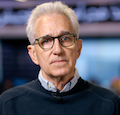
Dr. Jeffrey Gedmin is the President/CEO of MBN. Prior to joining MBN, Dr. Gedmin had an illustrious career as president/CEO of Radio Free Europe/Radio Liberty, President/CEO of the Aspen Institute in Berlin, president/CEO of the London-based Legatum Institute.
