
Dear Colleagues,
I’ve just reviewed an internal report on the competition; on Al Jazeera, Al Arabiya, Sky News Arabia, France 24, Deutsche Welle, BBC Arabic, EuroNews Arabic— plus outlets and influencers sponsored by the Chinese, Iranians, Russians, and Turks. The resources of rivals are staggering.
MBN is America’s only Arabic language voice for the Middle East and North Africa. We’re a Congressionally-funded, digital-first, increasingly multilingual outfit providing original news, analysis, and perspectives about the Middle East and America’s approach to the region. We support broad U.S. foreign policy goals. And you’re on a roll.
My gratitude.
To be sure, we need stable funding to operate optimally, plan properly, and compete effectively. We engage every day with Congress and the Administration on exactly this. We take nothing for granted. We’ll keep proving our worth. That’s why MBN keeps leaning into transparency, accountability, and new efficiencies.
MBN at Work
We simply cannot abandon the field to American competitors and adversaries. With limited resources, your multi-platform coverage remains remarkable, including on:
- Clashes in Gaza Between Hamas and Local Militias (thanks Rami Al Amine, Mahmoud Al Rawi). Armed groups — ideological and family-based, including Yasser Abu Shabab’s group — are trying to fill Gaza’s post-war security vacuum (Our friend Rob Satloff has a relevant column in the Wall Street Journal).
- Reform of the Palestinian Authority (again, thanks Rami and Mahmoud). There’s a PA anti-corruption push. There’s also lack of clarity on how much is real reform and how much is political cover linked to Gaza governance talks.
- President Trump’s Gaza Peace Council (thanks Ali Srour, Moataz Metwally, Rasha Ibrahim, and our DC and Israel teams). We look at Tony Blair’s proposed role and Arab-Israeli defense coordination under CENTCOM.
- CENTCOM–Arab–Israeli Military Cooperation (thanks Moataz Metwally, Rasha Ibrahim). We’re analyzing the expanded regional military integration since Israel joined CENTCOM in 2021. We’re reporting on recent revelations of joint Arab-Israeli operations during the Gaza war.
- South Sudan and a New Rebel Front (again, thanks Rasha). Field sources confirm a new armed group on the Sudan–South Sudan border displacing hundreds of thousands. China and South Sudan have a “strategic partnership,” with China serving as South Sudan’s largest trading partner and key investor in the oil sector.
- The Global AI Power Race (thanks Joseph Kawly with Youssef Saoud for data). Based on a JP Morgan report framing AI as a geopolitical frontier between the U.S. and China, Joe looks at AI as a measure of national power and security — and Washington’s drive to retain AI dominance.
- Is Iran Preparing for a Next War with Israel? (thanks Randa Asaad Jebai, Dalshad Hussein). Rhetoric is heating up; underground military projects are underway. Repression at home is intensifying. The clerics of Tehran are not yet giving up.
- Illegal Immigration and Reverse Migration (thanks Houda Elboukili). We’re seeing a decline in migration to Europe and a rise of reverse flows back to the Middle East and North Africa. We’re analyzing EU aid deals, Lebanon–Cyprus arrangements, and other links to changing migration patterns.
There’s more: on a Lebanon–Syria Policy Reset, on a Dubai Property Boom, from our Iraq Elections Series — with our coverage of Israeli strikes on Iran-linked cells in southern Syria.
You’ve not stopped.
Today, we launch MBN’s magazine. Check out our new landing page. Here you’ll find original perspectives on our region from writers and videographers, analysts and storytellers from across the world. Encourage people to sign up for our products here.
Next week comes Andres’s Iran letter, with right around the corner Min’s China influence tracker.
MBN’s offering is responsible, rich, varied, mission-aligned — with a secret sauce. We do real journalism with authenticity and credibility. It’s an unbeatable recipe for impact in time.
We’ll keep showing value. We’ll ramp up again. You’ve shown in the meantime what several dozen talented, devoted, plucky individuals can do. You’re remarkable, dear colleagues.
MBN Competitors, Adversaries — and the China Challenge
They do have resources, the others. RT Arabic has ten times our current staff. Saudi-funded Al Arabiya is a company of nearly 4,000 employees across the Middle East and North Africa.
Beijing doesn’t disclose, but estimates run into billions spent by China globally — with hundreds of millions sponsoring soft power and media operations in our region alone.
America needs its soft power strategy. I asked our colleague Min Mitchell this week about the Chinese. I’m sharing our conversation below. Let’s discuss with Min soon over a pizza lunch. For now, do take time for her exchange with me.
Soft Power Strategies and Beijing’s Approach to the Middle East and North Africa
Jeff Gedmin: Would it be fair to say that China’s soft power strategies have been more effective in the Global South than they have been in Western countries?
Min Mitchell. Yes, China’s “soft power” strategies generally resonate better in the Global South than in Western countries. Beijing’s strategy to promote messages of “Global South solidarity,” multipolarity, and opposition to “neo-colonial” (Western) cultural imperialism has found a receptive audience, as reflected in the latest Pew polls on global attitudes toward the PRC. China’s focus on economic relations, infrastructure development and trade, and model of development to become a major global power also appeal to governments and publics in Africa, Latin America, and parts of Southeast Asia and the Middle East.
JG: Can you say a word about Beijing’s soft power strategies in the Middle East and North Africa? What are the elements, the tools at play in advancing Chinese interests?
MM: Beijing’s soft power strategy in the Middle East and North Africa (MENA) combines media, culture, education, and diplomacy to shape perceptions and align regional narratives with Chinese interests. Central to this effort are Arabic-language media outlets like CGTN Arabic and China Media Group’s partnerships with local broadcasters, which amplify Beijing’s preferred framing of global issues—emphasizing development, multipolarity, and respect for sovereignty while avoiding direct political controversy.
China also invests heavily in people-to-people and cultural exchanges, from Confucius Institutes to scholarships for Arab students. This month, Beijing inaugurated its first Chinese cultural center in the Gulf in Kuwait, presenting itself as a modern, non-colonial partner distinct from the West. The Belt and Road Initiative adds an economic dimension, converting infrastructure projects and investments into political goodwill.
What sets Beijing’s influence in the Middle East and North Africa apart? It’s less about ideology and more about pragmatism. China offers a simple pitch: partnerships based on mutual benefit and non-interference—an attractive alternative for governments tired of Western conditions. And it doesn’t just talk the talk; it shows up with resources, investments, and long-term relationships that quietly expand its footprint.
JG: Harvard scholar Joseph S. Nye Jr., who coined the term “soft power,” described it as a way for countries to get others to “want what it wants.” What does China want in the Middle East?
MM: China’s objectives in the Middle East are pragmatic: stability, access, and influence. It seeks stability to secure energy supplies and safeguard investments; access to regional markets and infrastructure under the Belt and Road Initiative; and influence to promote a regional order less dominated by the United States.
Beijing wants Middle Eastern states to view it as a reliable, non‑interfering partner and a viable long‑term alternative to the United States and Western powers. Through its rhetoric of “win‑win cooperation,” it fosters alignment with its vision of a multipolar world—where U.S. primacy gives way to shared influence.
Ultimately, China aims for the region to gradually lean toward its model: prioritizing economic engagement with Beijing, accepting its narratives of sovereignty and development, and quietly backing—or at least not opposing—Chinese positions on sensitive issues like Taiwan and Xinjiang.
JG: Let’s turn to international media. Beijing invests in foreign language media outlets to advance its narratives. Give us a brief overview. The scale of operations globally? Investments and goals in the Middle East and North Africa?
MM: Beijing has significantly expanded its foreign-language media operations to shape global narratives and promote China’s image and policies, reflecting Xi Jinping’s directive to “tell China’s story well.” State media outlets such as CGTN now broadcast in six languages, reaching audiences across Asia, Europe, Africa, and the Middle East, with analysts estimating several billion dollars in annual global investments in media infrastructure, content production, and digital engagement.
In the Middle East and North Africa, these efforts complement Belt and Road Initiative projects. Chinese outlets collaborate with local media through content co-productions, training exchanges, and digital platforms like TikTok, aiming to highlight China’s development model, governance approach, and multipolar vision.
A notable recent development is the rise of provincial and city-level International Communication Centers (ICCs) that produce localized, tailored content in collaboration with academia and government propaganda agencies. These centers amplify China’s “discourse power” by localizing narratives to better align with regional priorities. Meanwhile, China uses AI-generated content, social media influencers, and unmarked accounts to disseminate its narratives discreetly — backed by aggressive diplomatic efforts to counter criticism.
JG: How does China view the United States as a competitor for influence in the Middle East? And Russia, Iran? Are they rivals or allies?
MM: As China broadens its global reach, the Middle East has emerged as a focal point for its quiet but calculated diplomacy. Beijing increasingly views the United States as its key competitor for regional influence, even as it avoids direct confrontation. Washington still dominates the security landscape through military partnerships and defense networks, yet China’s steady advance has come through economic and diplomatic means—trade deals, infrastructure financing, and the Belt and Road Initiative. Its pitch to regional capitals remains consistent: cooperation without political conditions, a contrast to the Western model of alliance-building.
Relations with Russia and Iran illustrate Beijing’s nuanced approach. With Moscow, China shares an interest in curbing U.S. dominance and promoting multipolarity, but each power pursues its own path—Russia through defense and security, China through investment and diplomacy. Ties with Tehran center on energy trade and shared resistance to Western pressure, yet Beijing carefully manages its stance to protect key relationships with Gulf monarchies and Israel alike.
Ultimately, Beijing is playing a long game in the Middle East. It competes subtly with Washington, coordinates selectively with Moscow and Tehran, and seeks to entrench itself as the region’s reliable, nonideological economic partner—anchoring influence through pragmatism rather than power politics.
JG: In the case of soft power generally and foreign language media specifically, how does China measure success? Sub-Saharan African nations have tended to view China favorably in recent years. The Middle East and North Africa?
MM: China does not provide a public record of how it measures soft power success. Presumably, Beijing will gauge public opinion polling, viewership/circulation/ratings of its international media outlets, consumption of its cultural exports and commercial brands, and acceptance of its various global “initiatives” to assess the success of its soft power goals.
In the Middle East and North Africa, attitudes toward China are broadly positive, though nuanced, based on its pragmatic economic engagement, non-interventionist foreign policy, and favorable diplomatic stance toward the Palestinian issue, especially when contrasted with Western policy. Nonetheless, China’s popularity is not yet deeply entrenched among the public, and most citizens have limited direct experience with Chinese people or culture. This presents an opportunity for the United States.
JG: How have China and its foreign language media outlets reacted to President Trump’s peace deal for Gaza?
MM: China’s state media have treated the Gaza ceasefire with measured optimism — welcoming humanitarian relief while cautioning that true peace remains distant. Xinhua and China Daily emphasized that the ceasefire offers “a glimmer of hope,” but that only “a comprehensive, lasting truce” anchored in a two-state solution can resolve the conflict. Coverage highlighted the mediating roles of Qatar and Egypt, and repeated China’s position that “Palestinians must govern Palestine.” Beijing’s messaging stayed consistent: humanitarian urgency, diplomatic restraint, and multilateral problem-solving.
Across platforms, China’s coverage avoided direct endorsement of Trump’s initiative. Instead, it positioned Beijing as a steady advocate for de-escalation and dialogue—a voice of balance in a volatile region, reinforcing China’s image as a pragmatic, peace-minded power with growing stakes in the Middle East.
Most Chinese state media coverage in recent days has focused less on the Middle East and more on the intensifying US-China trade war.
JG: A more differentiated view for our region if you would. Are there priority countries for Beijing?
MM: Beijing’s engagement across the MENA region, again, is carefully targeted to prioritize energy security, market access, and geopolitical influence. In the Gulf, Saudi Arabia, the UAE, Iraq, Kuwait, and Oman are central to China’s strategy. Saudi Arabia alone accounted for about 14-15% of China’s crude oil imports in 2024, cementing a partnership that now includes energy transition, digital infrastructure, and defense cooperation. The 2023 Saudi-Iran rapprochement, facilitated by China, highlighted Beijing’s growing role as both an economic and diplomatic player.
In North Africa, Egypt and Algeria remain key allies, hosting major Belt and Road projects that connect the Mediterranean to sub-Saharan Africa. Morocco is emerging as a priority, attracting Chinese investment in electric vehicle manufacturing and renewable energy. Western powers. It promotes a vision of “win-win cooperation,” hoping to align local governments
JG: Its wings may have been clipped, but the Iranian regime remains an obstacle to lasting peace and security in the Middle East. Beijing’s current view of its relationship with Tehran? Is the China-Iran axis a bulwark against U.S. and Western interests?
MM: China values Iran as a key energy supplier, a critical transport corridor under the Belt and Road Initiative, and a counterbalance to U.S. influence. China receives roughly 12-14% of its oil imports from Iran. However, following the June 2025 Iran-Israel conflict, the pace of partnership activity has accelerated, with Beijing doubling down on infrastructure projects and technological cooperation with Tehran under the 25-year agreement signed in 2021. These developments mark a shift from cautious hedging to more active integration, including high-speed rail and highway corridors across Iran.
At the same time, China continues to cultivate strong ties with Saudi Arabia, the UAE, and Israel, reflecting a regional strategy grounded in balance rather than bloc politics. Iran remains a useful but complex partner—important for energy and leverage, yet not central to China’s Middle East vision.
Beijing’s overriding goal is to maintain regional stability that safeguards its economic interests. That said, China seeks partners like Iran to help shape a post-American global order that favors its (illiberal) values and interests and expands PRC influence in the Middle East and beyond. Consequently, while the “China-Iran axis” phrase captures some strategic truths, it risks overstating a still-evolving and carefully managed relationship.
JG : Say a word about plans for your work at MBN. We’ll be casting a more careful eye on what China and Iran are pursuing across our region. Different actors with comparable goals? How can tracking Chinese influence be relevant and useful for our target audience in the Middle East?
MM: I’m thrilled to continue to expand my work on China here at MBN after many years at Radio Free Asia and the Global News Service. For decades, U.S. Congress–supported networks like ours have provided audiences worldwide with uncensored, fact-based news in environments where information is often manipulated. Today, as the global information space shifts with new geopolitics and technology, we need to evolve—building stronger connections with our audiences and staying relevant to their daily realities. MBN is already doing that—digitally transforming its production and broadening its coverage of China and Iran’s influence across the MENA region.
China’s growing footprint in the MENA is widely discussed by analysts, but there’s no single real-time, region-focused tracker. That’s where MBN comes in. With a skilled team fluent in both Arabic and Mandarin, we’re building a first-of-its-kind tracker mapping China’s investments, partnerships, and media activities across MENA. By drawing on Arabic, English, and Mandarin sources, the project will deliver a clear, data-driven view of how Beijing’s influence is evolving on the ground.
This matters because transparency empowers. For policymakers, businesses, and the public, understanding China’s expanding global role—from its Belt and Road projects to digital media outreach and beyond—helps us navigate the many complex challenges and opportunities of a rapidly changing global landscape.
*****
Thanks, Min.
Thanks Leila, Abed, Matt, Christian, and the rest of our crew for another full week. Each and every department in this company keeps stepping up.
Gratefully, Jeff

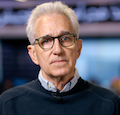
Dr. Jeffrey Gedmin
Dr. Jeffrey Gedmin is the President/CEO of MBN. Prior to joining MBN, Dr. Gedmin had an illustrious career as president/CEO of Radio Free Europe/Radio Liberty, President/CEO of the Aspen Institute in Berlin, president/CEO of the London-based Legatum Institute.
