
Lebanon’s future may now depend on one man’s balancing act.
Lebanese President Joseph Aoun is trying to hold together a country that’s falling apart without firing a shot. To Washington and Riyadh, he signals that Hezbollah’s reach will be contained south of the Litani River. To Hezbollah, he quietly promises that its weapons elsewhere will remain untouched.
To outsiders, it looks like duplicity. To Dania Aaraisi, a political scientist and Senior Fellow at the New Lines Institute, it’s something more tragic, the last survival mechanism of a fragmented state.
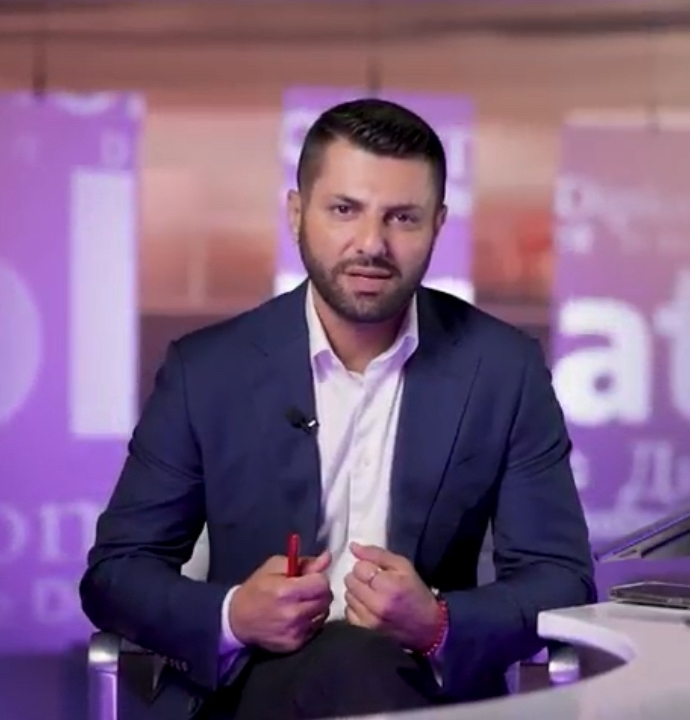
On this week’s episode of The Diplomat, Aaraisi said, “Aoun is not playing both sides. He’s managing impossibilities. Disarming Hezbollah isn’t a military decision; it’s a demographic one. It could fracture the country overnight.”
Aoun’s quiet diplomacy reflects the limits of the Lebanese state. “The Americans want decisive action,” Aaraisi said. “But the government knows the cost. Hezbollah still controls large parts of parliament and the street. Sending troops against them would mean civil war.”
She describes the government’s paralysis as a kind of enforced realism. “The army knows Hezbollah’s strength. They have the data, the numbers. What they don’t have is capacity. Everyone’s pretending otherwise.”
External pressure is only compounding the problem. “The Israelis are still bombing southern Lebanon,” Aaraisi said. “Some strikes target Hezbollah. Others hit civilians. Every explosion becomes Hezbollah’s justification to keep its weapons. They say, ‘You want us to disarm while we’re under attack?”
That, she argues, is the vicious cycle Washington fails to break. “If the U.S. wants Hezbollah disarmed, it must first stop giving it excuses,” she said. “Tell Israel to stop the bombings, and you take away Hezbollah’s last argument for keeping its guns.”
Aoun’s proposal to fold Hezbollah’s fighters into the national army alarms her. “We’ve seen that fail everywhere else,” she said. “You don’t cure division by importing it into your institutions.”
Then came the statement that stunned the country: Aoun calling for direct negotiations with Israel. Aaraisi says it divided both capitals.
“Some in Israel saw it as a breakthrough, the first pragmatic Lebanese voice in years,” she told me. “Others dismissed it, arguing Lebanon is too weak to negotiate. But let’s be clear: Aoun isn’t talking about normalization. He’s talking about survival.”
The backlash in Lebanon was immediate. “People accused him of betrayal,” she said. “But they missed the nuance. Direct negotiation doesn’t mean recognition. It means stopping the bleeding.”
When the U.S. envoy to Lebanon called the country a failed state, Aaraisi said the description wasn’t entirely wrong, but the intent mattered. “It’s both pressure and warning,” she said. “It’s meant to push Beirut harder. But Americans don’t always understand what’s possible here. When parliament even debated disarming Hezbollah, people took to the streets with guns. The government’s limits aren’t a lack of will. They’re the boundaries of what’s left of the state.”
Redefining Sovereignty
In the vacuum, the meaning of sovereignty itself is being rewritten. “The Americans want Beirut to define it,” Aaraisi said. “Aoun and Prime Minister Nawaf Salam seem to agree sovereignty means the state, and only the state, controls the guns.”
She points to the recent U.S. investment of $230 million in the Lebanese Armed Forces as proof. “That’s not aid. It’s architecture. It signals that the army, not Hezbollah or the UN, should be the country’s single security actor.”
The coming withdrawal of UNIFIL forces from the south, she added, reinforces the same message. “For the first time, sovereignty isn’t defined by who influences Lebanon but by who can actually protect it.”
Can Lebanon remain neutral? Aaraisi hesitated. “Neutrality is beautiful in theory and impossible in practice,” she said. “When you host armed factions on your soil, Palestinian, Syrian, Hezbollah, neutrality is just another word for powerlessness.”
Civil Society as the Last Institution Standing
Where the state falters, civil society steps in. “When the Beirut port exploded, it wasn’t the government that showed up. It was citizens,” Aaraisi said. “That’s why international donors trust NGOs more than ministries.”
But she also warned that bypassing the state entirely risks repeating Lebanon’s oldest mistake: building parallel systems that outlast reform. “We can’t replace the government,” she said. “But civil society can keep hope alive until the state is ready to earn back trust.”
Her PhD research shows how remittances quietly reshape the country’s politics. “Twenty-seven percent of Lebanon’s GDP comes from remittances,” she said. “But it’s not just money that moves, it’s values. People who receive funds from Europe or the U.S. are more liberal, more active in civil society, and less likely to support Hezbollah.”
That, she argues, is soft power in its truest form. “When I send money home, I also send ideas, about governance, dignity, and accountability. That’s how reform begins.”
A Transitional Collapse
Aaraisi doesn’t call this Lebanon’s end. She calls it its transition.
“This isn’t the new normal,” she said. “It’s the painful phase before reconstruction. Once Hezbollah is out of government, investors will return. The Gulf, the U.S., the Europeans, they’re all waiting.”
Until then, Lebanon lives suspended between the ruins of what it was and the fragments of what it could be.
Aoun’s balancing act may not save the country. But for now, it’s the only thing to keep it from breaking completely.

Joe Kawly
Joe Kawly is Washington Bureau Chief for MBN and a global affairs journalist with more than twenty years covering U.S. foreign policy and Middle East politics.
A CNN Journalism Fellow and Georgetown University graduate, he reports from Washington at the intersection of power and diplomacy, explaining how decisions made in the U.S. capital shape events across the Arab world.
