
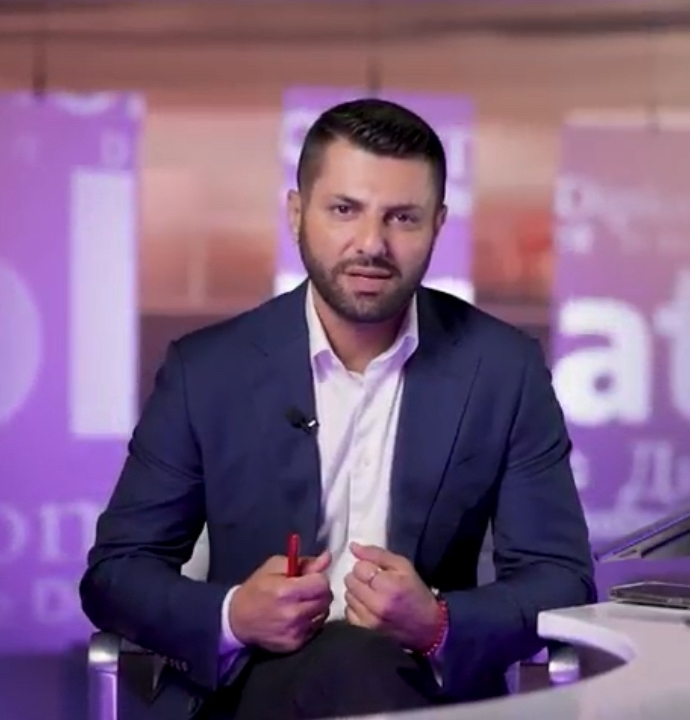

Welcome back to the MBN Agenda, our intel brief on the week ahead in the region.
The Board of Peace holds its first-ever meeting Thursday in Washington. Top of the agenda: Billions are on the table for Gaza. But there’s a catch.
Iran and the U.S. hold another round of talks in Geneva today – and the question here is, will it delay or stop a military confrontation in the Persian Gulf?
On Capitol Hill, lawmakers are weighing sanctions relief for Syria against conditions tied to Iran, minority protections, and control of armed factions.
But first on the Agenda this week, a scoop from Baghdad on one political impasse that has been resolved.
Follow our flagship MBN news sites (in Arabic or English) for the latest updates.
If you prefer to read the Agenda in Arabic, click here. Share your thoughts anytime at mbnagenda@mbn-news.com. And if the MBN Agenda was forwarded to you, please subscribe.
– Joe, Rami, Ghassan, and Andres
Exclusive
Kurdish Consensus

The Iraqi Kurds have broken their deadlock over who to nominate for president and unified behind a single candidate, according to our sources in Iraq. This impasse has been one of the reasons that Iraq hasn’t formed a government since the Nov. 11 national elections – and its end may open the way to it.
The Iraqi constitution, installed after the US invasion in 2003, gives the Kurds the power to name the country’s president. Under the emerging deal, the Kurdistan Democratic Party and the Patriotic Union of Kurdistan have reached consensus around the Patriotic Union’s nominee, Nizar Omidi, as the sole Kurdish contender. The agreement also divides federal and regional posts between the two parties, preserving their long-standing power balance.
Under Iraq’s constitution, a newly elected president must task the largest bloc with forming a government within 15 days. In practice, the president and prime minister are often decided in the same session.
That brings the focus back to former Prime Minister Nouri al-Maliki. He remains the ruling coalition’s nominee despite opposition from Sunni blocs, some Shiite factions, and Washington.
Parliament has already failed to convene twice. Kurdish parties were split over the presidency. Electing a president requires two-thirds attendance, allowing a coordinated minority to block the session by staying away. A unified Kurdish candidate removes that obstacle and restarts the constitutional clock. What parliament must do, as per the constitution, is elect a president within 30 days of its first session. The president then has 15 days to charge the nominee of the largest bloc with forming a government as prime minister‑designate.
Read Ghassan’s exclusive here

Joe Kawly brings you raw conversations with ambassadors, envoys and negotiators behind the hardest foreign policy decisions.
Quote of the Day
 We cannot ignore that today, on the most pressing matters before us, it [the United Nations] has no answers and has played virtually no role. It could not solve the war in Gaza. Instead, it was American leadership that freed captives from barbarians and brought about a fragile truce.
– Marco Rubio, U.S. Secretary of State, The U.S. in the World, Munich Security Conference, Feb. 14.
Washington Signals
Weapons Before Reconstruction

Can Gaza be rebuilt before it is disarmed? That’s the biggest question facing President Donald Trump’s summit of the Board of Peace on Thursday when more than 20 countries are expected to pledge over $5 billion for reconstruction.
The funding could yet be derailed. The potential stumbling block: Whether Hamas can be persuaded to give up its weapons. A senior State Department official told Joe, our Washington bureau chief, that the administration sees this as the critical issue: “Reconstruction without demilitarization is unsustainable. If Hamas retains heavy weapons, you don’t have stabilization. You have a temporary pause before the next war.”
Trump has made full Hamas disarmament a requirement to move to Phase Two of the ceasefire. That would lead to the start of Israel’s withdrawal, the installation of a technocratic administration in Gaza, and the start of reconstruction. Israel has warned of renewed military action if Hamas fails to comply within 60 days. Hamas says it can’t compromise on disarmament, though it has floated the idea of transferring weapons to a future Palestinian authority rather than surrendering them outright.
Three tracks are now in motion, but they are not separate.
- Disarmament. Heavy weapons and manufacturing sites would be dismantled in stages, tied to economic incentives and limited amnesty for Hamas fighters. Without that step, the rest stalls.
- Security. An International Stabilization Force is taking shape, though its mandate would be compromised if Hamas retains its arsenal. Indonesia has committed troops. Saudi Arabia has declined. The United Arab Emirates will provide aid but no forces. Turkey’s role remains blocked by Israel.
- Governance. A technocratic Palestinian body meant to administer Gaza remains outside the territory, waiting for security conditions that do not yet exist.
“The money is real,” a Gulf diplomat told MBN. “But no Gulf state wants to finance reconstruction that can be destroyed in the next round of fighting.”
For now, the pledges are lining up. The stabilization force is forming. The political structure is unfinished.
Until the weapons question is resolved, however, the framework rests on a fragile assumption: That money can secure stability before security itself is guaranteed.
Read more → Click here

Diplomatic Signals
Geneva Tea Leaves

A negotiation is unfolding quietly in Europe, and it may define the next chapter of the Middle East, or simply postpone the next crisis.
President Donald Trump told reporters aboard Air Force One that he will be “indirectly” involved in talks with Iranian officials in Switzerland. “They’ll be very important,” he said, describing Iran as “a very tough negotiator.”
Don’t expect a breakthrough, writes MBN’s Iran Editor Andres Ilves (subscribe to his Iran Briefing). The test here: Can Washington and Tehran keep talking even as both sides turn up the volume on confrontation?
The meeting once again brings together Iranian Foreign Minister Abbas Araghchi and a U.S. team led by President Donald Trump’s Middle East Envoy Steve Witkoff and Senior Adviser Jared Kushner. They’re getting together under the same format as in Muscat 11 days ago. Araghchi and his delegation in one room, the Americans in another, with Omani diplomats shuttling messages under Swiss “good offices.”
Washington wants Iran to halt further enrichment, accept enhanced monitoring, and end its regional interventions, while keeping any eventual sanctions relief phased, conditional, and reversible.
The key for the U.S. now is for any agreement to be tougher than the 2015 JCPOA agreement under President Barack Obama in three key ways: tighter and longer‑lasting caps on enrichment, stockpiles, and centrifuges; explicit constraints on Iran’s ballistic missile program; and a halt to Iran’s “network and campaign of regional aggression.”
Referring to Iran in a speech to U.S. soldiers last Friday, President Trump said that “They’ve been difficult to make a deal … sometimes you have to have fear. That’s the only thing that really will get the situation taken care of.” He also stated that sending a second carrier strike group under the USS Gerald R. Ford to the region is so that “we’ll have it ready” in the event the talks with Iran do not succeed.
For its part, Tehran is trying to project a measure of flexibility without retreating. Iran’s deputy foreign minister told the BBC the country is “ready to discuss [its nuclear program] and other issues related to our program if they are ready to talk about sanctions” and that the ball is “in America’s court to prove that they want to do a deal.”
Tehran has mooted diluting its 60 percent-enriched uranium as evidence of its willingness to compromise, but ruled out zero enrichment. It also flatly insists that missiles and their regional proxies are off the table.
Araghchi met IAEA chief Rafael Grossi in Geneva yesterday, underscoring how closely the nuclear body is plugged into this round of talks.
Featured Conversation

Is Muscat a bridge to a deal or a holding pattern before escalation? Ambassador Dennis Ross breaks down the leverage shaping the U.S.–Iran talks with MBN’s Washington Bureau Chief Joe Kawly.
Watch the full episode here
Congressional Pulse
The Syria Test

The six priorities for Congress in judging progress in Syria and possibly providing more sanctions relief.
At a recent House Foreign Affairs Committee hearing titled “Syria at a Crossroads: U.S. Policy Challenges Post-Assad,” lawmakers examined whether Damascus is meeting the conditions that stand between it and sanctions relief under the Caesar Act. Congress oversees sanctions and foreign assistance, so these benchmarks will determine the next steps.
Six priorities stood out. Protection of minorities is the first credibility check. Lawmakers repeatedly pointed to tolerance for Druze, Christians, Kurds, and Alawites as a measure of whether the new order can govern without sliding back into repression.
Sanctions relief is being framed as conditional and reversible. Counterterrorism remains central, with continued concern about ISIS networks and detention facilities in the northeast. Members also debated the future of the U.S. military presence, not only in terms of troop levels but also in its influence on Syria’s emerging security order. Integrating armed factions into a unified national structure drew scrutiny, as did the Kurdish file, including PKK dynamics and Turkey’s role.
The structure is clear. Security comes first. The new state must consolidate its military and internal security forces. Economic relief can then follow. Washington is approaching Syria cautiously, tying engagement to performance rather than promises.
Ticking Clocks in Syria

After laying out the conditions for engagement, U.S. lawmakers returned to the underlying leverage. The debate is not theoretical. It is about timing and control.
Two clocks are ticking.
Clock one is economic. Reconstruction is estimated at $216 billion. The government in Damascus needs capital.
Clock two is political. Sanctions under the Caesar Act remain in place and can snap back quickly.
Washington is offering time in exchange for behavior. Iran’s presence is the first test. Minority protection is the second. Governance reform is the third.
One clock runs on money. The other runs on compliance. If Damascus moves, relief follows. If it stalls, isolation might return.
Read the full analysis here
Joe Kawly
Joe Kawly is Washington Bureau Chief for MBN and a global affairs journalist with more than twenty years covering U.S. foreign policy and Middle East politics.
A CNN Journalism Fellow and Georgetown University graduate, he reports from Washington at the intersection of power and diplomacy, explaining how decisions made in the U.S. capital shape events across the Arab world.

Rami Al Amine
Rami Al-Amin is a Lebanese writer and correspondent for MBN covering political, social and cultural developments across the Middle East. He produces and presents the satirical critique segment Bitter Sweet, which examines current events through a critical lens. He holds a master’s degree in Islamic-Christian Relations from Saint Joseph University in Beirut. He is the author of Ya Ali, We Are No Longer the People of the South, a political booklet on Hezbollah, and The Two Mourners, a book on the history of Beirut’s Martyrs’ Statue.

Ghassan Taqi
A journalist specializing in Iraqi affairs, he has worked with the Middle East Broadcasting Networks (MBN) since 2015. He previously spent several years with Radio Free Europe/Radio Liberty, as well as various Iraqi and Arab media outlets.

Andres Ilves
Andres Ilves is Iran Editor and Senior Adviser at MBN. His career as a journalist and writer includes two decades at the BBC and Radio Free Europe.
