

Yemen appears in every threat assessment, yet it is absent from the screens.
What happens there does not stay there. Trade routes are affected, the regional balance of power is being rearranged, and political vacuums are filled by whoever holds the loudest weapon and the most forceful message. Understanding Yemen is not a local luxury. It is a security, economic, and humanitarian necessity that stretches from Aden to the Mediterranean.
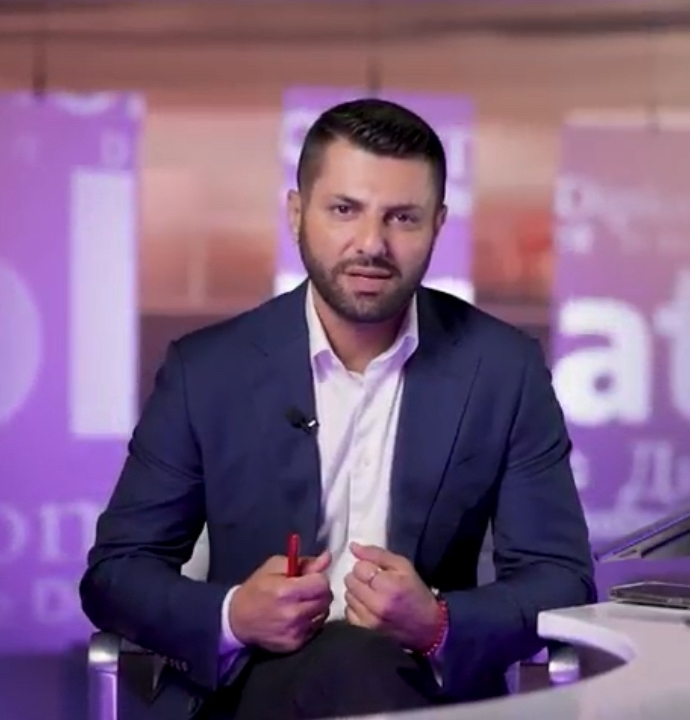
In this conversation from The Diplomat podcast, our guest is Ambassador Marwan Ali Noman, former Deputy Permanent Representative of Yemen to the United Nations and a researcher at the American Center for Yemeni Studies in Washington. He draws the map clearly, from the Houthis to Arab absence, from postponed settlements to the game of international silence.
Mr. Ambassador let’s begin with Yemen as a country. Yemen suffers from wars it did not start, and peace agreements it was not invited to. Behind the headlines, or their absence, the story continues. What does the world still not understand about Yemen’s political, tribal, and on-the-ground realities?
First, thank you for having me. We need to clarify who the Houthis are and the principles they operate from. The Houthis are an ideological group that believes it has a religious right to rule the Islamic world, not just Yemen. Mecca, Medina, and Jerusalem are part of their declared horizon. They view remaining in a state of conflict to achieve a larger goal. From that starting point, we can understand their behavior inside Yemen and across the region.
The first topic I want to touch on is the Iranian Saudi rapprochement. Are these empty promises for Yemen? We’ve often heard that reconciliation between Iran and Saudi Arabia would end the war in Yemen, yet attacks and strikes continue. Was this rapprochement more than just a diplomatic photo opportunity?
In 2021 there was optimism that the rapprochement would lead to calm in Yemen. But between the Baghdad talks and the signing of the agreements in Beijing, four to five Iranian weapons shipments bound for the Houthis were intercepted. This indicates that the flow of missiles and drones continued despite the reconciliation atmosphere. The message is clear: the diplomatic track did not stop the arming track.
Some say Iran is weaker today, and that Hezbollah has lost ground, yet the Houthis have not disappeared. They have become bolder. Are they less reliant on Iran now, or simply more confident?
With Iran losing some of its regional arms, the Houthis see themselves as the most cohesive force among Tehran’s proxies. They present themselves as a power that challenges the United States and Israel while supporting Gaza. After October 7, 2023, they seized the opportunity for a calculated escalation that offsets domestic pressures in their areas, from unpaid salaries to rising taxes. Their reliance on Iran continues, but their margin for independent action has grown.
From your regional experience, does the current rapprochement serve Yemen’s interests, or is it more about oil and regional image?
Any rapprochement between regional states benefits everyone, Yemen included. But the Houthis’ outlook goes beyond Yemen. The attacks on international shipping show that their calculations are tied to a broader deterrence balance, not just salaries or services.
Let’s talk about Yemen’s invisible war. It is absent from screens. Does that mean it is over? What should the world be seeing today?
The war has gone on long enough to fade into the background. It has had to compete for attention with Afghanistan, Ukraine, Sudan, and Gaza. The result is a deeper humanitarian collapse, with reduced funding and declining aid. When the spotlight goes out, the tragedy widens in silence.
Who benefits from painting Yemen’s scene in one color, the Houthi color?
The loser is the Yemeni people. The direct beneficiary is the Houthis, who have consolidated their authority. Regionally, Iran has benefited, increasing its support after other proxies weakened. Oversimplifying the picture gives the most organized actor an advantage the public does not deserve.
Why do we hear about the return of figures like Ahmed Ali Abdullah Saleh and Tareq Saleh? Does this serve Yemen or deepen divisions?
Any broad Yemeni alignment against the Houthi project serves the national interest. Tareq Saleh is a member of the Presidential Leadership Council, and his forces intercepted the most recent arms shipment. Ahmed Ali is a leader in the General People’s Congress and resides in the UAE. Their presence reflects the anti-Houthi camp’s search for a figure who can mobilize old constituencies with new tools.
Headlines speak of the “return” of Ali Abdullah Saleh or Ahmed Ali. Does this raise fears of the old regime coming back?
There does not seem to be a possibility of the old regime returning in its former shape. The Houthis, however, are pressuring GPC leaders in Sanaa to weaken any political alternative that could compete with them in their areas of control.
Is there a fear that Yemen’s scene could come to resemble Sudan or Egypt?
The path is different. Political forces that once allied with the Houthis have regrouped against their project. The division here is not between two armies, but between a state project and an armed project that overrides the state.
Does international silence mean acceptance of Yemen’s division as a fait accompli?
There is no official division, but Houthi control over large areas, including Sanaa, has led many to treat them as a political fact. This has given them more room to maneuver internationally, while weakening the legitimate government’s ability to speak to the world with one voice.
Even the U.S. position has shifted. How do you see that?
President Trump’s administration designated the Houthis as a terrorist organization. The previous Biden administration removed the designation, hoping to push them toward peace. The result did not match expectations, because the reading of the group’s nature was flawed. Without consistent pressure tools, the cost falls on civilians, not on the decision-makers in Sanaa.
Can we say Yemen has become a security burden on the Gulf?
The Houthis are a political and security burden on Yemen and the Gulf alike. Missiles and drones do not respect borders, and the economy suffers before politics does.
Is the current Gulf stance managing the conflict or quietly withdrawing?
It is an attempt at mediation to end the conflict, because ongoing fire threatens the Gulf internally as well as Yemen. We are seeing risk management more than withdrawal, but success requires Yemeni unity and serious international backing.
Given the dire economic situation, with hunger and unemployment, are these issues on the table? Is there even a “table” for Yemenis?
Certainly. These are among the most important topics discussed inside Yemen and in the context of peace talks with the Houthis. The priority now is the economy and improving people’s livelihoods, because political discussions can take years, but citizens cannot wait for salaries and services. Since 2022, when the Houthis attacked oil export terminals, the government has lost about 70 percent of its revenue. Today, taxes and customs barely cover obligations, and there are persistent problems with salaries, electricity, and basic services.
Finally, Mr. Ambassador, since we’ve been speaking about the international stance and you are in the United States, what would you ask of the next U.S. administration regarding Yemen?
The steps taken early by President Trump’s administration were encouraging because they brought some attention to Yemen. But later there seemed to be a reduction in interest, treating the file as a regional matter. Experience has shown that neglecting Yemen and misunderstanding its dynamics can lead to negative results that affect the region and the world, as we saw with Houthi attacks on international shipping.
When the Stockholm Agreement was signed, there was a view that Yemen was an internal and regional issue that did not affect international interests. The reality proved otherwise: whenever the Houthis move, they expand further, and their threats have gone beyond Yemen and the region to pose a danger to global security. That is why the Yemen file must be given priority, supporting the legitimate government and anti-Houthi forces, strengthening Yemeni institutions, and providing humanitarian aid to reduce suffering. All of this will have a positive impact on Yemen, the region, and the world.

Joe Kawly
Joe Kawly is Washington Bureau Chief for MBN and a global affairs journalist with more than twenty years covering U.S. foreign policy and Middle East politics.
A CNN Journalism Fellow and Georgetown University graduate, he reports from Washington at the intersection of power and diplomacy, explaining how decisions made in the U.S. capital shape events across the Arab world.
